
- Depression and anxiety cost the global economy an estimated $1 trillion a year in lost productivity, driven mainly by absenteeism and reduced performance on the job.
- The U.S. Surgeon General's Five Essentials framework gives employers a structured way to evaluate workplace well-being: protection from harm, connection and community, work-life harmony, mattering at work, and opportunity for growth.
- Manager training changes how supported employees feel. At companies that offer it, 69% of employees say their organization prioritizes mental health, compared with 40% at companies that don't.
- Integrated models that combine primary care and behavioral health under one care team are gaining ground over siloed, single-purpose benefits.
Mental health support has moved well past the open enrollment slide deck. It is now one of the more measurable levers an organization has for controlling cost and protecting performance, provided the program is built around how employees actually use care, not how it looks on paper.
For benefits leaders evaluating advanced primary and behavioral care, the relevant question in 2027 isn't whether to invest. It's how to structure that investment so people engage with it.
Why Mental Health in the Workplace Matters More Than Ever
The link between employee well-being and organizational performance is no longer a matter of opinion. It shows up in global health economics and in manager-level survey data alike.
Depression and anxiety cost the global economy an estimated $1 trillion each year in lost productivity, driven predominantly by reduced productivity rather than direct treatment costs. In the U.S., where access to care is uneven and stigma persists in many industries, that burden falls disproportionately on employers, who are often the best-positioned party to close the gap.
The U.S. Surgeon General's 2022 Framework for Workplace Mental Health and Well-Being gives employers a structured starting point. It identifies five essentials that, together, determine whether a workplace supports or undermines mental health:
- Protection from harm: physical and psychological safety, free from discrimination, bullying, and chronic overwork.
- Connection and community: a workplace where people feel they belong, not just where they clock in.
- Work-life harmony: genuine autonomy over when, where, and how work gets done.
- Mattering at work: fair compensation and a visible line between an employee's effort and the organization's results.
- Opportunity for growth: training, mentorship, and a clear path forward.
These aren't abstract ideals. They're operational levers, and organizations that act on mental health awareness in the workplace tend to see the return show up in retention, fewer sick days, and stronger team cohesion. The data backs that up directly, and the next section breaks down where to start.
How to Improve Mental Health in the Workplace
Moving from awareness to action means investing in a short list of things employees will actually use, rather than benefits that look comprehensive in a renewal presentation. Three areas consistently make the difference: how employees access care, how leadership talks about it, and how clearly benefits are communicated.
Expand Access To Round-The-Clock Advanced Primary Care
The most common practical barrier to mental health care isn't a lack of interest. It's the wait. Long appointment lead times and limited evening or weekend availability push people to delay care or skip it altogether.
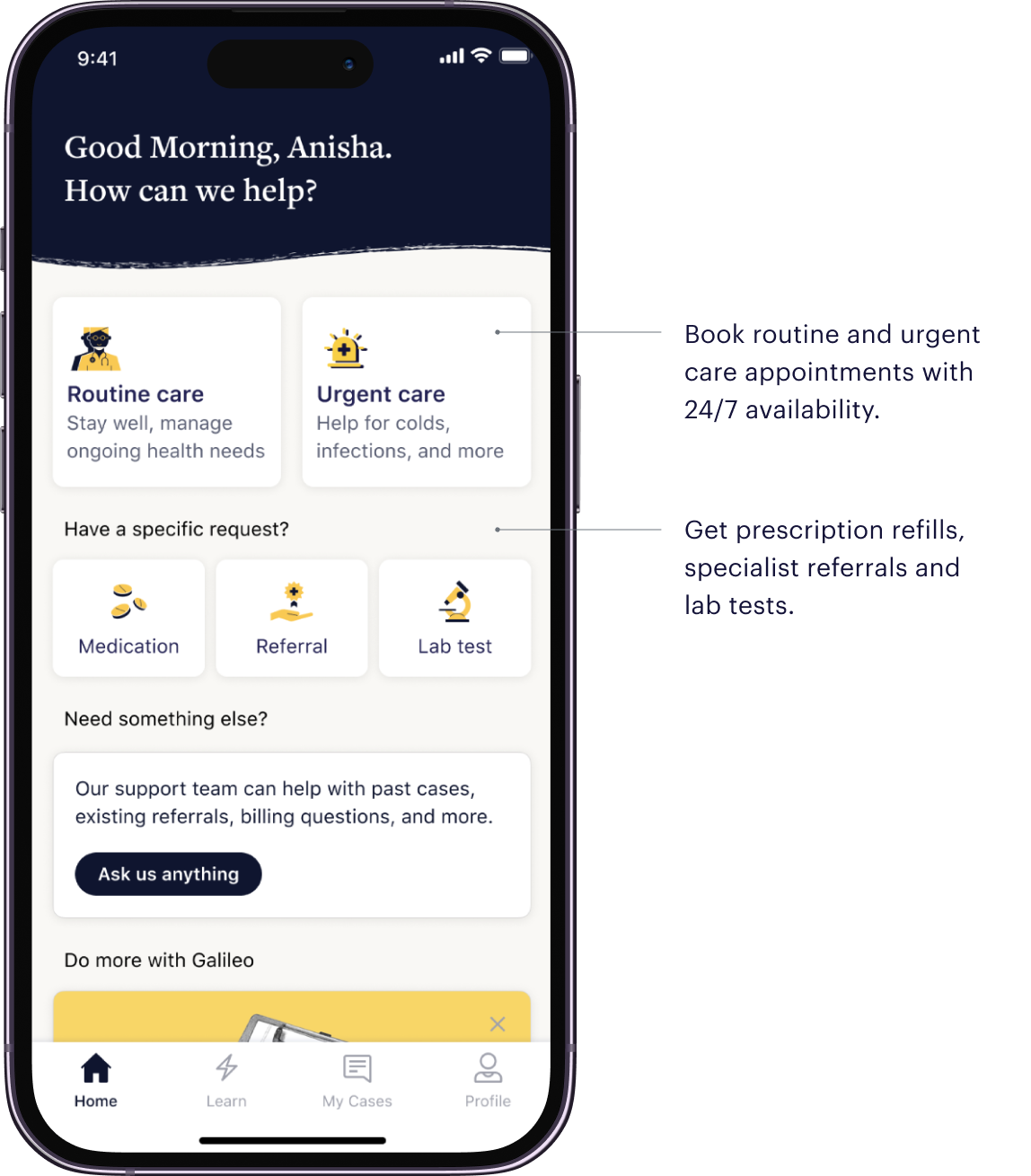
Advanced primary care removes that bottleneck by design. Employers offering integrated medical and behavioral health benefits give employees a single point of entry for both, rather than a primary care plan on one side and a separate behavioral health vendor on the other, each with its own intake process and no shared history between them.
Consider an employee managing a chronic condition who develops sudden anxiety symptoms during a high-pressure week at work. In a siloed system, that usually means an urgent care visit, a call to the insurance directory, and a multi-week wait for a therapist who has no visibility into the underlying condition.
In an integrated model, the same employee completes an intake in the app, is assessed by a provider within minutes, and is referred to a behavioral health program the same day, with the care team already aware of the chronic condition and how the two interact.
Have Leadership Model Openness, Not Oversharing
When leadership talks about mental health in the same matter-of-fact tone used for any other benefit, it signals that using the available support is acceptable. That doesn't require disclosing a personal diagnosis. It requires consistently acknowledging that mental health matters and that resources exist, rather than treating the topic as something to address once a year in an all-hands message.
The same logic holds at the clinical level: when a behavioral health conversation happens inside a routine primary care visit instead of a separate, clearly labeled mental health appointment, employees report less stigma and are more likely to follow through on treatment.
Make Benefits Easy To Find And Use
Utilization tends to track communication, not generosity. A 2026 NAMI-Ipsos poll found that only six in ten employees know how to access mental health care through their employer-sponsored insurance, even when the benefit already exists. Clear, repeated communication, at onboarding, during open enrollment, and at intervals throughout the year, closes that gap faster than adding another vendor does.
Workplace Mental Health Training for Managers
Managers shape day-to-day team culture more than any policy document. Training that builds practical skill, rather than clinical responsibility, is what actually changes outcomes.
Teach Managers To Recognize Distress, Not Diagnose It
Effective training covers how to notice signs of distress without overstepping into diagnosis. Changes in behavior, performance, or engagement can signal that someone is struggling, and managers need a way to approach that with care rather than pressure, opening a conversation without forcing one.
Build Psychological Safety Into Everyday Leadership
The goal is an environment where employees feel comfortable raising concerns without fear of judgment or retaliation. Managers set that tone through their own behavior: how they respond to mistakes, how visibly they protect their own boundaries, and whether they treat a request for flexibility as routine or exceptional.
Treat Training As Ongoing, Not A One-Time Event
The same NAMI-Ipsos survey found that fewer than three in ten managers have received training on how to talk with their teams about mental health, and nearly a third say their organization hasn't given them adequate resources to support their teams.
The downstream effect is measurable: at companies offering mental health training, 86% of employees say they feel cared about by their managers, compared with 70% at companies without it. A single lunch-and-learn doesn't move that number. Recurring, built-in training does.
Mental Health Workplace Trends for 2027
Staying current on mental health workplace trends helps benefit leaders decide where to put the next dollar. Three shifts stand out this year.
Advanced Primary Care Has Become The Default Expectation
Employees increasingly expect mental health support that fits around their schedule rather than requiring half a day off for an appointment. Advanced primary care, with 24/7 access built in, has moved from a pandemic-era accommodation to a baseline expectation, particularly among distributed and shift-based workforces.
Outcomes Are Replacing Access As The Measure That Matters
The best employee wellness platforms for mental health now compete on outcomes, not just on whether employees can log in. Employers want evidence that a benefit changes the total cost of care, not just a utilization report. Galileo, for example, has documented an 11.5% reduction in total cost of care within six months of working with employer partners, a result tied directly to its integrated, team-based model rather than a standalone point solution.
Integrated Medical And Behavioral Health Is Replacing Siloed Point Solutions
The older model, separate vendors for physical and behavioral health with no shared record between them, is giving way to single-care-team approaches. When a care team can route someone directly to 1:1 behavioral health therapy and coaching or a self-guided CBT program without a separate referral or sign-up, utilization tends to follow.
The table below summarizes the practical difference between the two models.
Turning Access Into Outcomes
The data on workplace mental health isn't ambiguous anymore. Organizations that combine round-the-clock advanced primary care, trained managers, and integrated benefits see the return in retention, engagement, and total cost of care.
What's left is operational: choosing a model employees will actually use, communicating it clearly, and holding it to the same outcome standard as any other benefit investment.
For employers ready to move from scattered point solutions to a single, integrated model, Galileo's employer solutions are built around exactly that combination of access, continuity, and measurable outcomes.

%20(1)%20(1).webp)
.webp)
.webp)

.webp)
.webp)











%20(1).webp)
%20(1).webp)











.webp)






.webp)