- Employee benefits communication is most effective when it clarifies the care model, not merely the benefits menu.
- Low engagement often reflects a fragmented care experience rather than a lack of awareness or motivation.
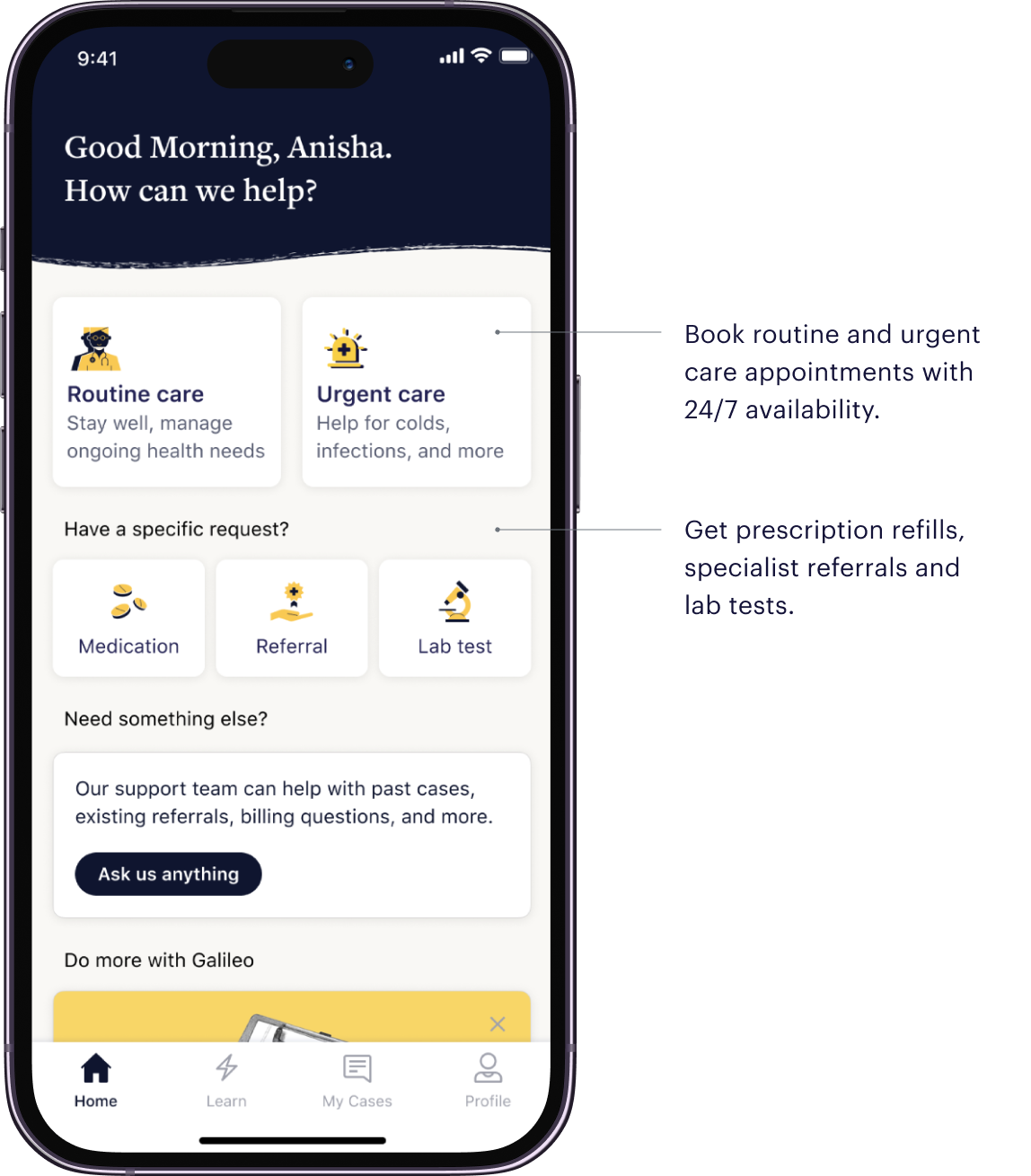
- Advanced primary care gives employers and health plans a stronger communication anchor by creating one starting point for everyday, urgent, chronic, and mental health needs.
- A successful communication strategy guides members toward the right care pathway before needs become more complex or costly.
- Leaders should evaluate benefits communication by activation, appropriate utilization, care resolution, member confidence, and total cost of care, not by open rates alone.
Most teams treat it as an administrative task: explain the plan, announce changes, remind people of deadlines. That framing is too narrow.
Communication shapes how members access care. When the model is fragmented, leaders end up explaining multiple vendors and pathways at the exact moment members need simplicity, so well-funded benefits go underused.
Advanced primary care fixes that by giving the model one clinically accountable starting point for everyday, urgent, chronic, and mental health needs.
The real question isn't how to communicate benefits better. It's whether the care experience is coherent enough to communicate clearly.
Why Benefits Communication Often Falls Short
Many organizations assume low engagement is an awareness problem. In response, they increase the volume of communication: more emails, more reminders, more benefit guides, more webinars, more vendor materials.
These tactics can be useful, but they have limits. Communication can't fully compensate for a benefits architecture that's difficult to understand.
A member with a new symptom, a medication question, stress or anxiety, and an ongoing chronic condition may be expected to figure out which resource applies: primary care, urgent care, a behavioral health vendor, a condition-specific program, a nurse line, a navigation tool, or a specialist, each with its own entry point and its own explanation.
In that environment, the communication burden increases because the system itself lacks a clear center of gravity.
This distinction matters for how you measure success. Benefits communication designed only to increase awareness can produce higher email engagement or webinar attendance without changing care behavior. Communication designed to clarify the care pathway helps members access the right care earlier, avoid unnecessary escalation, and use available benefits with more confidence.
A 2024 survey reported by the Plan Sponsor Council of America backs this up directly: employees who feel well informed about their benefits participate in them at meaningfully higher rates than those who don't, a pattern that held across every benefit type the survey measured.
What Employee Benefits Communication Should Accomplish
A strong employee benefits communication strategy should do more than describe what's available. It should help members understand how to move through the care system.
At a minimum, benefits communication should answer three questions:
- Where should members start when they need care?
- Which needs can be addressed through each care option?
- How does the benefit connect to better access, continuity, and outcomes?
This matters most for health benefits specifically. It isn't enough to state that virtual care, mental health support, or chronic care programs are available. Leaders need to explain how those resources fit together.
Virtual care can mean very different things. A transactional urgent care visit isn't the same as an advanced primary care model. The first may resolve a single issue. The second can serve as a longitudinal, clinically accountable entry point for a much broader set of needs, the distinction at the center of Galileo's employee health benefits guide.
When benefits communication reflects that model, it becomes more than a promotional campaign. It becomes a care navigation strategy.
Advanced Primary Care as the Communication Anchor
The most effective benefits communication strategies are built around a simple organizing principle: members should know where to start.
Advanced primary care creates that starting point. Instead of communicating primary care, urgent care, chronic care, behavioral health, prescriptions, and specialty guidance as separate resources, leaders can communicate them as part of one connected care experience. This doesn't eliminate the need for detailed benefits education, but it gives the communication strategy a clearer hierarchy.
The central message becomes: start with advanced primary care. The care team can address many needs directly and guide the member to the appropriate next step when additional care is required.
This approach matters because most health care decisions happen outside open enrollment. Members don't typically make care decisions while reading plan documents. They make them when they're sick, pressed for time, managing a chronic condition, worried about a symptom, or unsure whether they need urgent care, primary care, mental health support, or a specialist.
A More Strategic Benefits Communication Framework
A benefits communication plan should be structured around decision points, not just communication channels.
Pre-open enrollment communication establishes context: what's changing, which care options matter most, and how members should think about access after enrollment. Open enrollment communication supports informed selection, with clear explanations of plan options, costs, deadlines, and the care resources included in each plan. Post-open enrollment communication is where most organizations lose momentum: once enrollment closes, communication often slows down even though members still need guidance on how to use care appropriately. Extending communication well past the enrollment deadline, rather than treating it as a single event, is exactly the fix.
The goal isn't to communicate more often. It's to communicate with greater clinical and strategic coherence.
Communication Should Drive Appropriate Utilization
For leaders, the objective of benefits communication isn't simply higher utilization. More visits, more logins, or more vendor engagement don't automatically indicate better performance. The more important question is whether communication is directing members to the right level of care at the right time.
This is where advanced primary care does real strategic work, and it plays out differently across three benefit types that depend heavily on communication to get used at all:
- Virtual primary care competes with the default habit of waiting out a problem or heading to urgent care. Communication that keeps a 24/7 care team top of mind, not just during open enrollment, shifts that default.
- Mental health support carries its own communication challenge: stigma slows people down even when they know a benefit exists. Messaging that normalizes use, paired withcare that integrates mental health into the same advanced primary care team rather than routing it to a separate standalone app, tends to outperform.
- Chronic condition management often goes unused simply because employees don't realize ongoing support exists beyond an annual physical. Periodic reminders tied to relevant moments, a new prescription, a seasonal flu push, work better than a single mention buried in an enrollment packet.
When members understand that a coordinated care team can serve as the first point of contact, more needs get assessed and resolved earlier. Some issues get handled virtually. Some need follow-up. Others need labs, prescriptions, behavioral health support, or specialist involvement. The member doesn't need to make those triage decisions alone.
This matters because health care costs concentrate in complex and ongoing needs. CDC data show that 90% of the nation's $5.3 trillion in annual health care spending goes toward people with chronic and mental health conditions. For employers and health plans, communication around primary care, behavioral health, and chronic care isn't a peripheral engagement tactic. It's part of a broader strategy to move care upstream, improve continuity, and reduce avoidable downstream utilization.
How Leaders Should Measure Benefits Communication
Traditional communication metrics are useful but incomplete. Email open rates, click-through rates, webinar attendance, and intranet visits indicate reach. They don't demonstrate whether members know where to go for care.
A more mature measurement approach connects communication to behavior and outcomes:
- Activation of advanced primary care or virtual care benefits
- Appropriate use of primary care as a first point of contact
- Mental health engagement and chronic care follow-up
- Preventive care completion
- Reduction in repeated HR questions about the same benefit
- Member confidence in navigating care, and member satisfaction
- Avoided urgent care or emergency department use
- Total cost of care trends
For health care benefits specifically, the strongest measure isn't whether members recall that a benefit exists. It's whether communication helps them access the right care earlier, with less confusion and less avoidable escalation.
Communicate the Model, Not the Menu
Employee benefits communication is often evaluated as a messaging function. For health care benefits, it's better understood as part of the care strategy itself.
Clear communication reduces confusion, increases confidence, and improves benefit adoption, but communication has structural limits. If every care need sends members to a different vendor, portal, phone number, or clinical pathway, even the strongest campaign will struggle to produce sustained engagement. The more strategic opportunity is to make the care model easier to use in the first place, which is the same principle behind Galileo's health plan solutions: one coordinated experience across primary care, urgent needs, chronic conditions, and mental health support, so the communication itself has less work to do.
Ready to make benefits easier to use, not just easier to explain? Galileo's employer and health plan partnerships are built to make advanced primary care the intuitive starting point for everyday, urgent, chronic, and mental health needs.

%20(1)%20(1).webp)
.webp)
.webp)

.webp)
.webp)

.webp)









%20(1).webp)
%20(1).webp)











.webp)