
- Healthcare utilization management (UM) uses prior authorization, concurrent review, retrospective review, and discharge planning to confirm that services are medically necessary and delivered in the right care setting.
- Traditional UM is reactive by design. It reviews utilization only after a provider has already ordered a service.
- For self-funded employers, the stakes are direct: every avoidable ER visit, unnecessary specialist referral, or preventable readmission is a dollar the plan absorbs, not an insurer.
- Galileo's data shows its coordinated, team-based primary care model resolves over 90% of member issues without a specialty referral, with an 11.5% reduction in total cost of care within six months and members over 70% less likely to need a specialist, ER, or urgent care visit.
For health plans and self-funded employers, utilization management is one of the most direct levers available to control costs and improve care quality. When it works, it ensures the right care reaches the right patient in the right setting. When it doesn't, it adds administrative friction without changing the underlying utilization pattern it was built to manage.
Galileo's position is that this distinction matters because most UM vendors acknowledge it. We view utilization management as a downstream measure of a healthcare system's design, not a standalone lever to pull. A prior authorization program can review the referrals, admissions, and ER visits a fragmented care model generates, but it cannot prevent them.
That is the job of advanced primary care built for how self-funded plans operate: a coordinated, team-based model that resolves the majority of clinical needs before they generate a claim, so UM has less to review in the first place.
What Is Healthcare Utilization Management?
Healthcare utilization management is the set of clinical and administrative processes that health plans, employers, and care teams use to evaluate whether medical services are necessary, appropriate, and delivered in the most effective setting. At its core, a UM program asks one question: is this service the best option for this patient right now?
The concept isn't new. Utilization review traces back to the 1970s, when Medicare-affiliated review organizations began performing preadmission review of hospital stays. Modern programs combine clinical guidelines, real-time data, and automation to make faster, more consistent decisions. What has also changed is the growing recognition that review alone is only part of the answer. The programs that produce the strongest results pair rigorous review with a care model that reduces the volume of services requiring review in the first place, which is the position Galileo has built its model around.
Key Components of a Utilization Management Program
Understanding what sits inside the traditional UM toolkit matters because it clarifies both where these tools add value and where they fall short of what most organizations actually need.
Prior Authorization
Prior authorization requires providers to obtain approval before delivering certain services, including advanced imaging, specialty medications, elective surgeries, and durable medical equipment. Automation has made the review faster, handling routine requests instantly while routing complex cases to clinical staff.
The limitation is structural. Prior authorization only activates after a provider has already decided to order something. It can catch a clearly inappropriate request, but it can't prevent the ordering pattern that generates those requests in the first place.
Concurrent Review
Concurrent review assesses ongoing care, usually during a hospital stay, to determine whether continued admission remains medically necessary or whether a patient can safely transition to a lower level of care. It prevents unnecessary days, not unnecessary admissions.
Retrospective Review
Retrospective review analyzes care after it has been delivered. It catches billing errors, identifies utilization patterns worth addressing, and informs future policy. What it can't do is undo care that has already happened or prevent it from recurring without a different care model underneath it.
Discharge Planning
Discharge planning coordinates care transitions, confirming that patients leave with follow-up scheduled, prescriptions filled, and support in place. Gaps here are one of the clearest predictors of readmission, which is why strong discharge planning and strong UM are inseparable in practice.
Modern Alternatives to Prior Authorization
A few approaches have emerged to address the friction traditional prior authorization creates, without abandoning clinical oversight.
- Gold carding exempts providers with strong compliance records from prior authorization requirements for specific services, giving high-quality, in-pattern clinicians a shorter path to delivering care.
- Episode-of-care authorization covers an entire treatment episode upfront rather than requiring approval service by service, reducing administrative repetition without reducing clinical oversight.
- Advanced primary care as structural prevention is the most significant shift of the three. When a coordinated care team resolves the majority of needs in-house, the referrals that do reach prior authorization are more clearly necessary, better documented, and faster to approve. This isn't a workaround for UM. It's the foundation that makes UM work better, and it is the piece of the equation most vendors leave out.
How Utilization Management Programs Reduce Costs
UM reduces costs in three ways that are real but limited, and one way that most programs underestimate.
The three that are real: catching clearly unnecessary services before they're delivered, directing patients to appropriate care settings through concurrent review, and flagging high-cost episodes early enough for case management to intervene. These work, and they matter.
The one thing most programs underestimate is prevention. When members have access to a care team that addresses concerns before they escalate, the volume of services requiring review drops.
There is also a direct regulatory incentive at play. The Medical Loss Ratio requirement under the Affordable Care Act requires health insurers to spend at least 80% of premium dollars on medical care and quality improvement (85% for large-group plans), with shortfalls owed back to members as rebates. That structure creates a direct financial incentive to put care spending toward genuine clinical value rather than administrative friction or avoidable escalation.
This is where Galileo's model diverges from a standard UM vendor. Members using Galileo's advanced primary care model are over 70% less likely to require a specialist appointment or a visit to the ER or urgent care. That is a care-model result, not an authorization result, and it is the clearest illustration of where durable cost savings actually originate.
Where Traditional Healthcare UM Falls Short
Prior authorization, concurrent review, and retrospective analysis are valuable tools. But all three are all reactive: they engage after a service has already been ordered, which means they're managing a utilization pattern that has already formed.
The root cause of most avoidable utilization isn't inappropriate ordering. It's a fragmented care model where:
- Members without reliable access to primary care default to the ER for manageable concerns.
- Chronic conditions go unmanaged between annual visits, generating specialist referrals and hospitalizations that coordinated follow-up could have prevented.
- Behavioral health needs are routed to disconnected vendors with no shared record, so neither the mental health nor the physical health concern gets fully addressed. Galileo has written more on how point solution fatigue drives this kind of fragmentation and what it costs employers.
- Care navigation doesn't exist, so members self-refer to specialty care that a primary care team could have managed or avoided entirely.
A well-designed prior authorization program can review those downstream cases, but it can't prevent them without a different care model upstream, which is precisely the gap advanced primary care is built to close.
What Effective UM Looks Like for Self-Funded Employers
For self-funded employers, utilization management is a direct financial concern, not a regulatory checkbox. Every avoidable ER visit, unnecessary specialist referral, or preventable readmission comes directly off the plan's bottom line, which changes how the ROI calculation works.
Self-funded employers have more flexibility in program design than fully insured plans, and more responsibility for the choices they make. The most effective self-funded UM programs share a few structural characteristics:
- Claims data is actually used: Risk stratification, a foundational piece of value-based care solutions for self-funded employers, helps identify which members are trending toward high-cost utilization before they get there, so case management and care navigation resources can engage early rather than reactively.
- Primary care is the entry point, not a secondary resource: When employees can reach a clinical team 24/7 for urgent concerns, chronic condition follow-up, and behavioral health support, they use it. When they can't, they use the ER. The difference shows up directly in the plan's claims data.
- Care navigation connects clinical review to actual care: Authorization approval doesn't guarantee that a member receives appropriate follow-up care or avoids a readmission. A care navigation function that bridges the authorization decision to the clinical reality closes that gap.
- Stop-loss is a backstop, not a strategy: Stop-loss protects against catastrophic claims. It doesn't address the underlying utilization pattern that generated them. Self-funded employers that rely on stop-loss as their primary cost management lever are managing costs after the fact rather than preventing them.
For self-funded plans working with Galileo's employer model, over 90% of clinical issues are resolved in-house without a specialty referral. That means the specialist referrals that do reach the prior authorization queue are more clearly necessary and clinically supported. The authorization decision is simpler, faster, and less likely to generate an appeal.
How Integrated Primary Care and Care Navigation Strengthen UM
The strongest utilization management programs aren't built on better authorization software. They're built on a care model that reduces the volume of services that need authorization in the first place.
Integrated primary care, where one care team manages urgent concerns, chronic conditions, behavioral health, and specialty coordination from a single longitudinal record, addresses the root causes of avoidable utilization rather than reviewing them after the fact. When that model includes embedded care navigation, routing members to the right level of care before they make the wrong decision on their own, the UM program's job becomes substantially easier.
The value-based care model that produces the strongest UM outcomes looks like this: a clinical team that catches a chronic condition flare-up by text message before it becomes an ER admission, manages a behavioral health need alongside a physical health concern in the same encounter, and coordinates a specialist referral only when it's genuinely needed, already having documented the clinical rationale that makes the prior authorization process fast and clear.
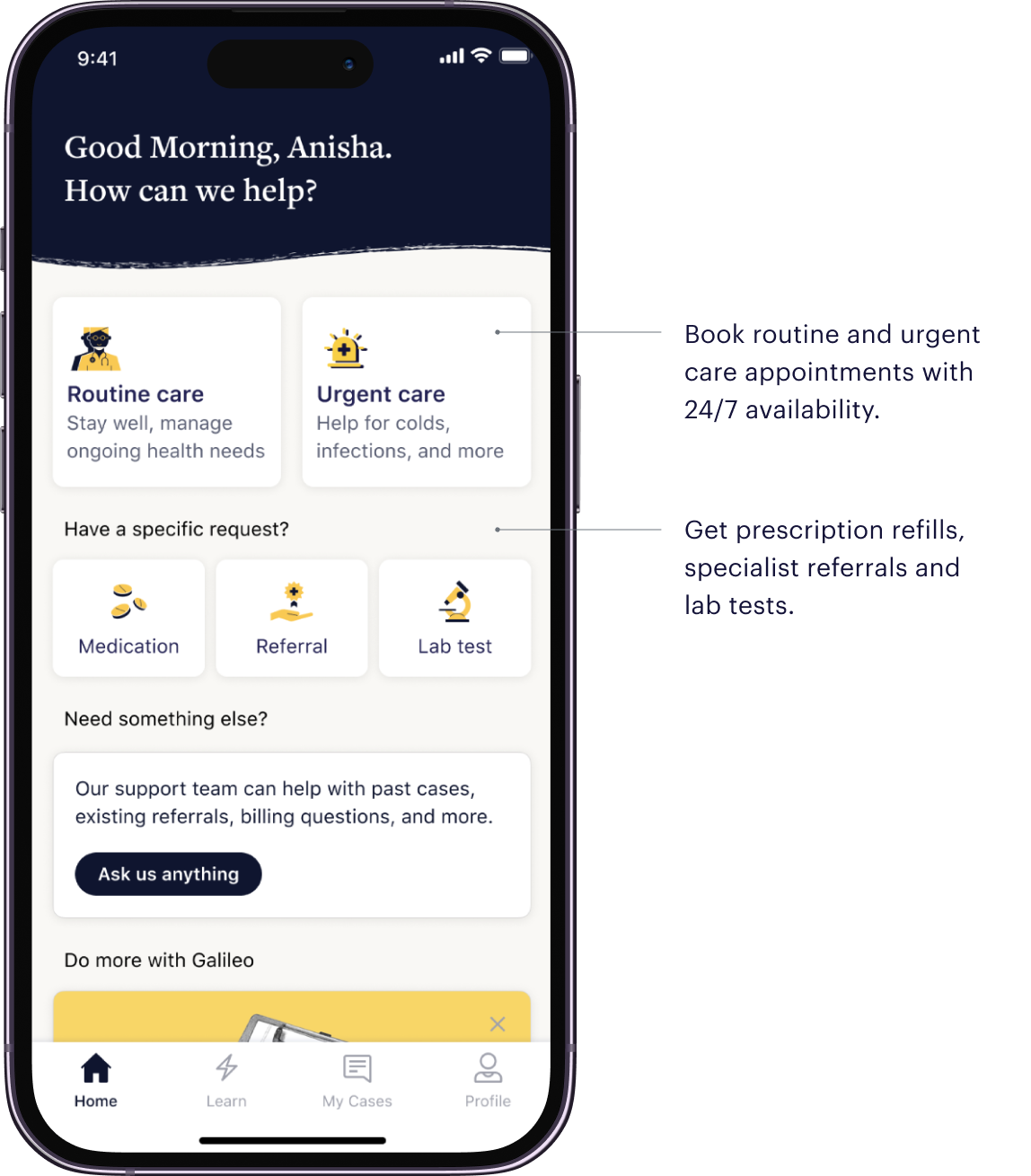
This is the structure Galileo's care model is built around: 24/7 virtual access across text, video, and phone, integrated behavioral health, continuous chronic condition management, and care navigation that connects members to the right setting. Across employer and health plan partnerships, that model has delivered an 11.5% reduction in total cost of care within six months, with members over 70% less likely to need a specialist, ER, or urgent care visit.
Measuring Utilization Management Effectiveness
Authorization turnaround times and denial rates describe process efficiency. They don't describe whether the UM program is actually changing outcomes or costs. A more complete UM scorecard includes:
- Total cost of care trend, across the full member population and across all care settings.
- Avoidable ER and urgent care utilization, the clearest signal of whether primary care access is functioning.
- Readmission rates, the clearest signal of whether discharge planning and care coordination are working.
- Care resolution rate, the share of clinical concerns addressed without generating a downstream referral, specialist visit, or hospitalization.
- Specialist referral rate per enrolled member, tracked over time to show whether the care model is managing more in-house or escalating at the same rate.
For self-funded employers, the most useful measure is total cost of care per member per year, broken out by setting, against a well-matched comparison group. Everything else on this list is diagnostic. That number is the outcome.
Build UM Around Prevention, Not Just Review
Utilization management works best as one component of a broader care strategy, not as the primary cost control mechanism. The programs that produce durable savings pair strong review processes with a care model that reduces the volume of services needing review. When UM operates on top of a fragmented care system, the authorization queue never gets shorter, because the underlying care pattern keeps generating the same referrals.
Utilization Management remains necessary and worth doing well. But advanced primary care and care navigation are what determine how much work UM has to do in the first place.
For health plans and self-funded employers ready to build that kind of integrated approach, Galileo's partner programs combine coordinated primary care, embedded care navigation, and value-based accountability into one model designed to reduce the downstream utilization of UM reviews, not just manage it.

%20(1)%20(1).webp)
.webp)
.webp)

.webp)




.webp)












%20(1).webp)
%20(1).webp)











.webp)






.webp)