

Key Takeaways
- Traditional health insurance costs over $22,000 annually for families, plus deductibles of $5,000+, driving people to explore alternatives like primary care memberships, health sharing ministries, and catastrophic coverage.
- Primary care memberships ($50-$150/month) provide unlimited 24/7 virtual access to doctors and often pay for themselves after a few visits compared to $150-$300 urgent care costs.
- Combining catastrophic insurance, a primary care membership, and targeted supplemental coverage typically costs 40-60% less than traditional comprehensive insurance.
- Virtual-first platforms offer phone and video consultations, prescriptions, lab orders, and specialist referrals without requiring traditional insurance.
- Each alternative has trade-offs—health sharing ministries aren't legally obligated to pay claims, short-term plans exclude pre-existing conditions, and catastrophic plans require high out-of-pocket spending before coverage kicks in.
Here's the reality: nearly 30 million Americans don't have traditional health insurance. If you're one of them—or if your current plan costs too much and covers too little—you're not stuck. Alternative health insurance plans exist, and some actually work well for the right situations.
These aren't magic solutions. They're different models: health sharing ministries, short-term medical coverage, direct primary care memberships, and virtual care platforms. Each has real trade-offs. What matters is understanding what you're getting, what you're giving up, and whether it matches your actual health needs.
This guide walks through each option—what it costs, what it covers, and who it works for. No hype, no fear tactics. Just the information you need to make a decision that makes sense for your life.
Why People Look for Alternatives to Traditional Health Insurance
The cost problem is simple: traditional health insurance has become unaffordable for millions of Americans. That's driving people to explore other ways to access care and manage medical expenses.
Rising Insurance Costs Hit Hard
The average family now pays over $22,000 annually for employer-sponsored coverage, according to recent data from the Kaiser Family Foundation. If you're buying individual coverage through the marketplace, expect $500-$800 per month for a single person. That's before you pay your deductible, which can easily hit $5,000 or more before your insurance actually kicks in.
Self-employed workers and small business owners feel this squeeze harder because they can't access group rates. You're left choosing between paying for coverage you can barely afford to use and going without protection entirely.
High Deductibles Mean You're Self-Insuring Anyway
Many plans come with deductibles so high that you avoid care until something goes seriously wrong. A bronze-level ACA plan might have a $7,000 deductible. That means you're paying the full cost of most medical care out of pocket while also paying hundreds monthly for coverage.
It's a frustrating setup: you're essentially self-insuring for routine care while paying premium prices for catastrophic protection you hope never to need.
Coverage Gaps Leave You Exposed
Even good traditional insurance comes with gaps:
- Narrow networks that limit your choice of doctors
- Prior authorizations that delay necessary treatment
- Separate, lower limits for mental health services
- No dental or vision coverage without additional policies
These gaps mean unexpected costs and delayed care, even when you're paying for "good" coverage.
{{blog-image}}
Primary Care Membership Plans with Direct Access Without the Middleman
Primary care memberships cut out insurance companies entirely. You pay a flat monthly fee directly to a provider or platform in exchange for unlimited access to virtual primary care services.
How It Works
Think of it like a gym membership, but for your health. You pay monthly, you get access to care when you need it. No copays, no deductibles, no surprise bills for routine visits.
Most platforms offer same-day or next-day appointments with actual visit times of 20-30 minutes—not the rushed 7-minute average you get with traditional insurance-based care. You can reach your care team through phone or video calls when symptoms come up.
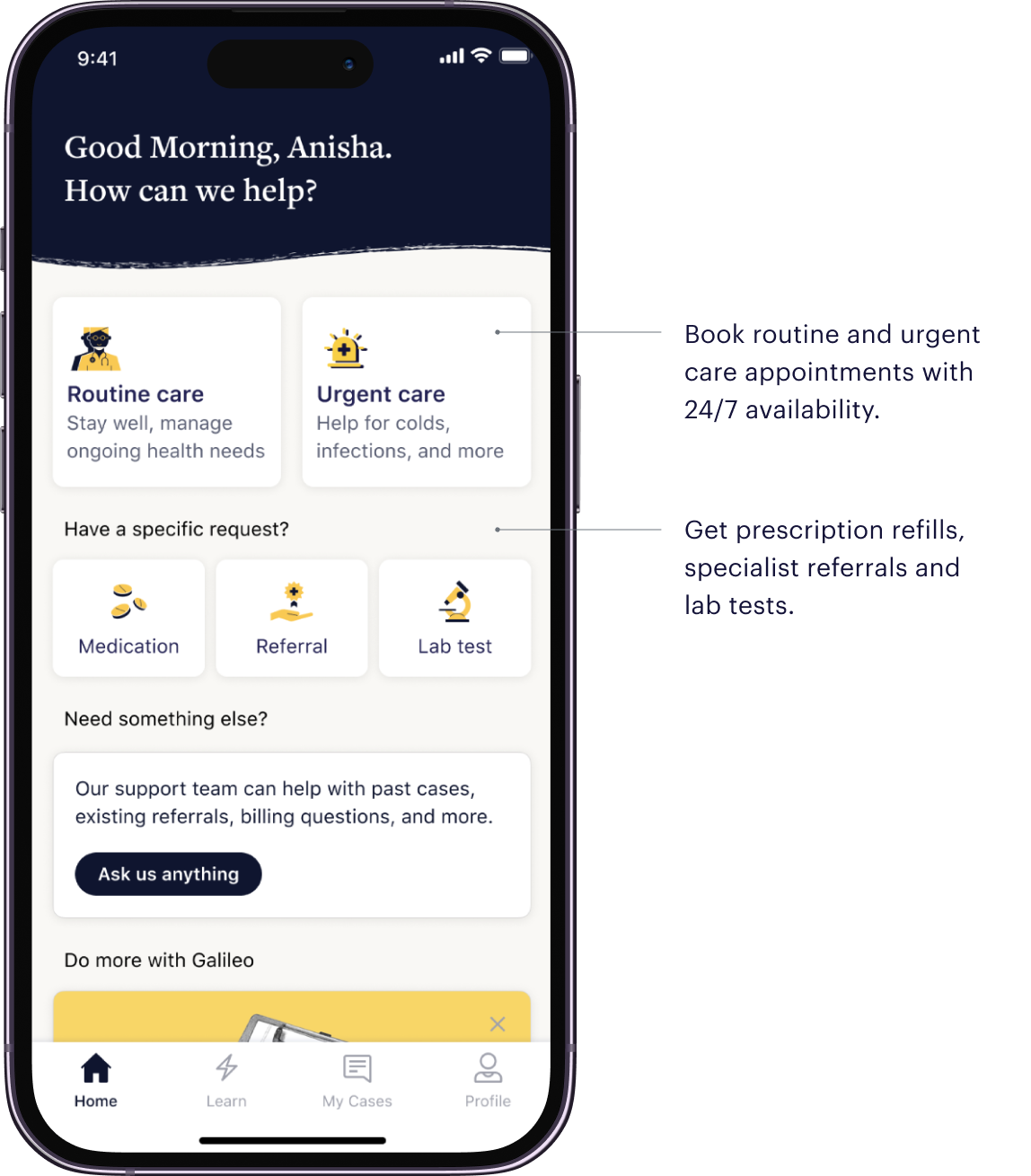
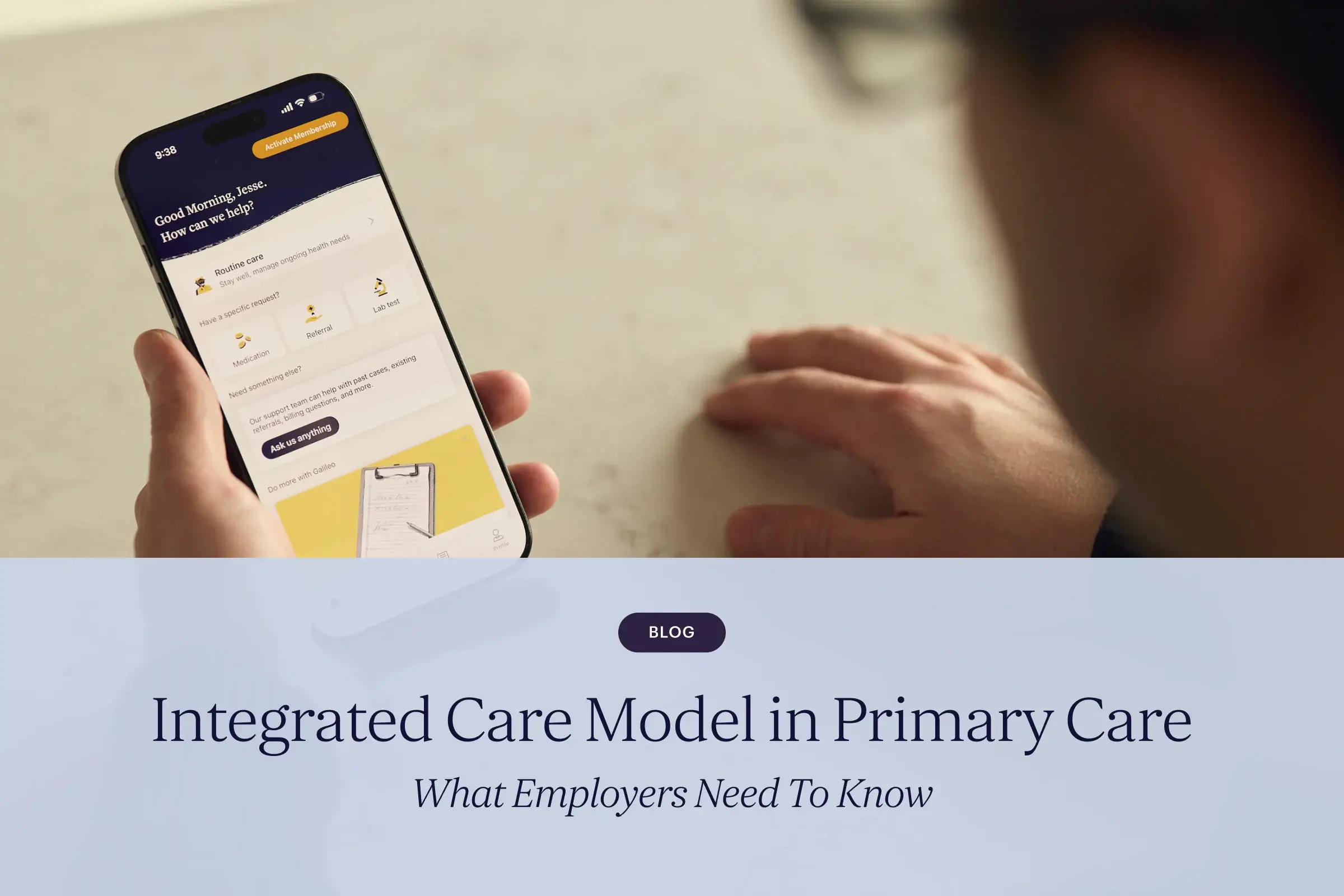
Virtual-first platforms have changed the game here. With Galileo, for example, you get 24/7 access to board-certified doctors and nurse practitioners across all 50 states through voice and video consultations. If you wake up at 2 AM with concerning chest pain or your kid spikes a fever on Sunday afternoon*, you can talk to a real doctor right then.
*Pediatrics is only available for some plans and employers.
What You Pay and What You Get
Most primary care memberships run $50-$150 per month for adults, with family discounts available. For that price, you typically get:
- Annual physicals
- Chronic disease management (diabetes, high blood pressure, anxiety)
- Urgent care for common illnesses
- Preventive care screenings
- Basic lab work and vaccinations
- Many prescriptions at wholesale prices
Some advanced platforms go beyond virtual visits. If you have complex conditions that need hands-on care, certain memberships include comprehensive virtual, in-home care visits and access to clinics in your community.
Who This Works For
Primary care memberships excel at handling everyday health needs and catching problems early:
- Managing chronic conditions that need regular check-ins
- Parents with young kids who need care for fevers, rashes, and minor injuries
- Remote workers who need appointments that don't disrupt their workday
- Anyone who wants preventive care without a deductible barrier stopping them from getting that concerning symptom checked
What it doesn't cover: major medical events, surgery, hospitalizations. For that, you'll need additional coverage.
How to Access Virtual Primary Care Without Insurance
If you don't have traditional insurance, you have several ways to access virtual primary care directly. Here's what your options look like:
{{alternative-plans}}
Direct Virtual Care: No Insurance Needed
You can connect with licensed physicians without insurance through direct virtual care platforms. No referrals, no insurance cards, no claims to file.
With platforms like Galileo, you download the app, create an account, and request a visit when you need one. Doctors can diagnose common conditions, prescribe medications, order lab tests, and create treatment plans—just like in-person visits. The difference is that you can access care within minutes, not weeks.
Monthly Membership vs. Pay-Per-Visit
Here's how the numbers break down:
Pay-per-visit: Individual virtual visits typically cost $40-$80. If you have recurring issues—say, UTIs that need treatment four times a year—that's $160-$320 annually, plus medication costs.
Monthly membership: At $50-$75 monthly ($600-$900 yearly), you get unlimited visits plus wholesale medication pricing. The value increases significantly for families or anyone managing chronic conditions that need regular check-ins.
Even if you add catastrophic coverage for major medical events, the combined cost often stays well below traditional insurance premiums.
What Virtual Primary Care Actually Covers
Through virtual primary care platforms, you can handle:
- Urgent issues (infections, rashes, fever, minor injuries)
- Chronic disease management (diabetes, high blood pressure, asthma)
- Mental health support (anxiety, depression)
- Preventive care (annual checkups, health screenings)
- Lab test orders
- Specialist referrals when needed
- Prescription management and refills
What you can't handle virtually: emergencies requiring immediate physical intervention, complex procedures, major surgery, and hospitalizations. For those situations, you need either traditional insurance or additional coverage options.
Health Care Sharing Ministries
Health care sharing ministries pool monthly contributions from members to pay each other's medical expenses. Over one million Americans use these programs as alternatives to traditional insurance.
How Cost Sharing Works
Members pay a monthly "share" amount (typically $200-$500 for families, according to HSA for America's healthshare comparison) that goes into a pool. When you have a medical expense, you submit it to the ministry, which facilitates payment either to providers or through reimbursement.
Most programs require you to pay an initial "unshared amount"—similar to a deductible—usually $1,000-$5,000 before the sharing kicks in.
Critical difference from insurance: These programs aren't legally obligated to pay claims. Payment depends on available funds and whether your expenses meet the ministry's guidelines. This isn't insurance; it's mutual aid.
The Cost Comparison
Sharing ministry contributions typically run 30-50% less than traditional insurance premiums. A family of four might pay $400-$600 monthly versus $1,200-$1,800 for traditional coverage.
The trade-offs:
- No legal obligation to pay claims
- Pre-existing conditions often face waiting periods or permanent exclusions
- Routine care and preventive services usually aren't shared
- Best suited for generally healthy individuals who want catastrophic protection
These programs don't count as ACA-compliant insurance, but you won't face tax penalties for using them.
Short-Term Health Insurance Plans
Short-term insurance serves as a temporary bridge between jobs, waiting for employer coverage to start, or during other life transitions. It provides basic medical coverage for limited periods at lower costs than standard policies.
Coverage Periods and What's Excluded
Short-term plans typically last 30 days to 364 days, with some states allowing renewals up to 36 months total.
What's usually covered:
- Emergency services
- Hospital stays
- Surgery
- Some diagnostic tests
What's often not covered:
- Pre-existing conditions
- Maternity care
- Mental health services
- Preventive care
These plans don't meet ACA requirements for essential health benefits. That means they can deny claims for conditions you had before enrollment. Annual and lifetime benefit caps are common—some plans max out at $1 million in coverage.
Who This Works For
Short-term coverage uses medical underwriting, so insurers screen applicants. Young, healthy people usually get approved easily. Those with chronic conditions might face denial or exclusion.
Best situations for short-term plans:
- Recent graduates are losing student coverage
- Early retirees are not yet eligible for Medicare
- Workers between jobs need gap coverage
Some self-employed individuals use them year-round, but this carries risks given the coverage limitations.
The Real Cost Picture
Monthly premiums for short-term insurance often cost 50-80% less than ACA plans. A healthy 30-year-old might pay $100-$200 monthly versus $400-$500 for a bronze ACA plan.
The catch: Deductibles can reach $10,000 or higher. Coinsurance might leave you paying 40% of costs even after meeting the deductible. Out-of-pocket maximums, if they exist, often exceed $20,000.
Factor in coverage exclusions and benefit caps, and a serious illness could still lead to significant medical debt despite having coverage.
Discount Health Plans and Medical Cards
Discount health plans negotiate reduced rates on medical services through provider networks. These aren't insurance—they provide immediate savings at the point of service.
How the Discounts Work
Discount programs negotiate bulk rates with healthcare providers, passing savings of 10-60% to members. You present your membership card at participating providers and pay the discounted rate immediately. No claims, no reimbursement delays.
Networks often include thousands of doctors, dentists, vision centers, and pharmacies nationwide. The model works because providers prefer guaranteed payment at lower rates over dealing with insurance claims or unpaid bills.
What You Save On
Most discount plans focus on routine and preventive services:
- Dental cleanings: $200 → $80
- Vision exams: $150 → $60
- Generic prescriptions: $40 → $10
Some comprehensive plans include discounts on specialist visits, mental health counseling, chiropractic care, and alternative medicine. Lab work and imaging often see 40-50% reductions. Prescription discount cards can slash medication costs by up to 80%, particularly for generics.
Important limitation: These programs don't cover major medical expenses or emergencies. They're supplements, not replacements for catastrophic protection.
Spotting Legitimate Programs vs. Scams
Discount plans face less regulation than insurance, so scams exist. Red flags to watch for:
- Promises of "guaranteed coverage" for pre-existing conditions
- Pressure tactics or requests for large upfront payments
- Vague provider directories
- Claims that sound too good to be true
Legitimate programs:
- Clearly state they're not insurance
- Provide detailed, verifiable provider directories
- Offer transparent fee structures
- Monthly fees typically range from $10-$50 for individuals, $20-$100 for families
Check your state insurance department's website for complaints. Verify provider participation directly before signing up.
Association Health Plans for Groups
Association health plans let small businesses and self-employed individuals band together for group insurance benefits typically reserved for large employers.
Small Business and Freelancer Access
Small businesses with fewer than 50 employees often can't afford quality health benefits. Association plans let these businesses join forces through industry groups or geographic associations to access large-group insurance rates.
Freelancers and gig workers can join professional associations offering group coverage, transforming independent contractors into a unified risk pool. Plans might cover entire industries—construction, real estate, technology sectors—or focus on geographic regions.
Potential savings: Premiums can drop 20-30% compared to small group or individual market rates. Many associations also bundle dental, vision, disability, and retirement benefits.
Professional Organization Coverage
Professional organizations—from writers' guilds to engineering societies—increasingly offer health plan access as member benefits. These groups leverage collective membership for better terms with insurance companies.
Coverage typically mirrors traditional employer plans: comprehensive medical, prescription, and specialist care. Some organizations partner with innovative primary care platforms to create integrated care models.
For example, employers working with virtual-first platforms that combine virtual and in-home services report significant cost reductions while improving member health outcomes. Data shows the total cost of care can drop by double digits within months when primary care access improves.
Organizations typically offer multiple plan tiers, letting members choose between low-premium, high-deductible options or more comprehensive coverage based on needs and budgets.
Choosing What Actually Works for You
Selecting from alternative health insurance plans requires an honest evaluation of your situation, health needs, and financial resources. The right answer often involves combining multiple alternatives.
Start With Your Real Health Needs
If you're generally healthy: A primary care membership for routine needs plus catastrophic coverage for emergencies often works well.
If you're managing chronic conditions: You need consistent primary care access. Comprehensive virtual care platforms that offer 24/7 access to your care team make sense here.
If you have young children: Platforms with round-the-clock access matter. Kids get sick at inconvenient times—midnight fevers, weekend injuries. Being able to reach a doctor immediately through phone or video prevents unnecessary ER visits.
Consider your prescription needs, whether you need specialists, and how you prefer to access care. Location matters too—some alternatives offer better coverage in certain states.
Do the Math on Total Annual Costs
Create a realistic comparison of total yearly costs:
Traditional insurance example:
- $500 monthly premium = $6,000/year
- $5,000 deductible
Total if you use care: $11,000
Combined alternative example:
- $75 monthly primary care membership = $900/year
- $150 monthly catastrophic coverage = $1,800/year
- $50 monthly supplemental insurance = $600/year
- Catastrophic deductible if needed: $5,000
Total if you use care: $8,300
Factor in tax implications—only ACA-compliant plans qualify for subsidies. But also consider value beyond cost: convenience, provider quality, and whether you can actually use the coverage when you need it.
The Combination Strategy That Works
The most effective approach often combines multiple alternatives:
- Foundation: Catastrophic health insurance for major medical events
- Routine care: Primary care membership for everyday needs, preventive care, and chronic condition management
- Specific gaps: Supplemental insurance for concerns like critical illness or accidents, based on your risk factors
This typically costs 40-60% less than traditional comprehensive coverage while providing similar or better access to care.
Employers increasingly adopt this model. Employers embedding integrated virtual and home-based primary care into their benefits see both cost savings and improved employee health. Galileo's platform, which combines virtual care with in-home services and community-based mobile clinics when needed, shows an 11.5% reduction in total cost of care within six months for employers. That's real money saved while employees get better access to care.
The key is matching the model to your actual needs, not buying coverage based on fear of worst-case scenarios that may never happen.
Finding What Actually Works
Alternative health insurance plans provide real options for Americans seeking affordable healthcare outside traditional insurance models. From primary care memberships and health sharing ministries to virtual care platforms and catastrophic coverage combinations, these alternatives offer flexibility and potential cost savings.
No single option works for everyone. What matters is understanding each alternative's strengths and limitations, then building a strategy that matches your health needs and budget.
The healthcare system is changing. Virtual-first platforms, direct primary care, and creative combinations of coverage are making care more accessible and affordable for individuals, families, and employers. Smart decision-making means researching your options, doing the math, and choosing coverage you'll actually use over coverage that just looks comprehensive on paper.

%20(1)%20(1).webp)
.webp)
.webp)

.webp)
.webp)




.webp)












%20(1).webp)













.webp)






%20(1).webp)