- Workplace absenteeism is often driven by health conditions, caregiving demands, access barriers, and work design rather than a lack of commitment.
- Poor health creates both absenteeism and presenteeism, so employers should measure missed time alongside reduced productivity at work.
- Frontline and hourly workers face greater barriers because fixed shifts, limited flexibility, transportation, and language can make care difficult to access.
- Strong interventions combine 24/7 virtual care, integrated primary and mental healthcare, on-site or near-site options, and bilingual support.
- Employers should track absence frequency, duration, cost, and healthcare utilization against a baseline to measure results.
Employees miss work because of acute illness, unmanaged chronic conditions, mental health needs, and difficulty reaching care around their schedules. Most of those causes share a root problem: a separate vendor and a separate entry point for every need.
An advanced primary care model removes that burden by giving employees one accountable team instead of a maze to navigate. The stakes go beyond wages paid during an absence: overtime, staffing gaps, and pressure on remaining employees. Reducing absenteeism takes more than enforcing attendance rules. It takes closing the access gaps keeping people from timely care.
Absenteeism Is a Symptom, Not the Problem
Most attendance strategies start with the symptom: track who's missing work, then respond with policy or enforcement. That manages the record without touching what's actually driving it.
A care system built from disconnected vendors, each with its own entry point, puts the burden of navigation on the employee least equipped to carry it. The fix isn't another point solution layered on top.
It's one accountable care team across urgent, preventive, chronic, and mental health needs, which is the structural difference behind Galileo's model. The rest of this guide breaks down what's actually driving absenteeism and which interventions address that access problem rather than just the attendance record.
What Is Absenteeism in the Workplace?
Workplace absenteeism is the time employees are unavailable for scheduled work because of illness, injury, caregiving, personal obligations, or other reasons. It can include approved and unapproved time away, although employers generally focus reduction efforts on recurring or unplanned absences that disrupt operations.
Absenteeism should not be confused with presenteeism. Absenteeism means an employee is not working. Presenteeism occurs when an employee is at work but performs below their usual capacity because of illness, pain, stress, or another health issue.
This distinction matters because the appropriate response depends on the cause. Attendance enforcement may address no-call, no-show behavior, but it will not resolve a lack of primary care access or an unmanaged chronic condition.
How Much Does Workplace Absenteeism Cost?
Absenteeism creates direct and indirect costs. Direct costs include paid time off, overtime, temporary labor, replacement coverage, and administrative work. Indirect costs include delayed production, lower service levels, errors, disrupted teams, and reduced output from employees working while unwell.
An Integrated Benefits Institute analysis estimated that poor health cost U.S. employers $575 billion in 2019. Its model included approximately 978 million days lost to illness-related absence and the equivalent of another 540 million days lost to presenteeism. The figures are historical, but they illustrate why employers need to evaluate the full productivity impact of employee health rather than counting sick days alone.
Which Sectors Have the Highest Absence Rates?
The U.S. Bureau of Labor Statistics reported an overall absence rate of 3.2% among full-time wage and salary workers in 2025, including 2.2% attributed to illness or injury. Rates varied considerably by occupation and industry.
These figures are useful comparison points, not universal performance targets. Workforce demographics, scheduling models, geography, seasonality, and leave policies all affect an organization's rate. Employers should compare similar roles and locations, then investigate material differences within their own workforce.
What Causes Absenteeism in the Workplace?
Acute and Untreated Health Conditions
Respiratory infections, migraines, gastrointestinal problems, pain, and other acute needs can cause sudden absences. Time away may become longer when employees can't obtain a timely appointment, diagnosis, prescription, or follow-up plan.
Poorly Managed Chronic Conditions
Diabetes, hypertension, asthma, and other ongoing conditions can lead to repeated absences when employees lack consistent management and follow-up. Nearly 52% of U.S. adults have at least one major chronic disease, according to NIOSH, making chronic care a workforce issue rather than a concern limited to a small group.
Mental Health Needs and Burnout
Anxiety, depression, stress, and burnout can affect attendance, concentration, and an employee's ability to remain at work. The World Health Organization estimates that depression and anxiety contribute to 12 billion lost working days globally each year and $1 trillion in lost productivity.
Mental and physical health also interact. An employee managing chronic pain and depression, for example, benefits from coordinated support rather than two disconnected programs that don't share context.
Barriers to Accessing Care
Employees may delay care because appointments are unavailable outside working hours, clinics are far from the worksite, transportation is unreliable, or taking time away means losing income. Delayed care can turn a manageable issue into a longer absence or push employees toward higher-cost settings.
Low Benefits Awareness and Engagement
A benefit can't reduce absence if employees don't know it exists, understand when to use it, or trust the experience. Complicated portals, separate vendors for every condition, and communication limited to open enrollment all suppress engagement.
Caregiving and Personal Responsibilities
Childcare disruptions, an ill family member, eldercare, and transportation problems also contribute to unexpected time away. These aren't clinical issues, but flexible scheduling, caregiver resources, and supportive leave practices can reduce their operational impact.
Work Design and Management Practices
Understaffing, unpredictable schedules, high physical demands, low job control, workplace conflict, and unsupportive management can worsen health and attendance. Employers should evaluate whether the work environment contributes to the patterns they're trying to correct.
Why Frontline and Hourly Workers Face Greater Barriers
Frontline employees often can't work remotely or move tasks to another part of the day. Missing one shift can immediately affect production lines, patient coverage, store operations, transportation schedules, or customer service.
These workers may also face:
- Fixed or rotating shifts that conflict with traditional clinic hours
- Limited ability to leave work for an appointment
- Fewer transportation options near the worksite
- Greater financial consequences from missing a shift
- Less consistent access to a computer or benefits portal
- Language barriers that make healthcare navigation harder
Language access deserves particular attention. The U.S. Census Bureau reports that more than 1 in 5 people, 22%, age 5 and older in the United States speak a language other than English at home. For a diverse workforce, bilingual care and benefits communication are practical access requirements, not optional additions.
How Employee Health Affects Workplace Absenteeism
Employee health affects both whether someone can work and how quickly they can return. A minor condition treated promptly may require little or no time away. The same condition can create a longer absence when care is delayed or fragmented.
The relationship generally follows four pathways:
- Access: How quickly can the employee reach appropriate care?
- Continuity: Does the care team understand the employee's history and ongoing conditions?
- Follow-through: Can the employee obtain prescriptions, testing, referrals, and follow-up without unnecessary delays?
- Engagement: Does the employee know how and when to use the benefit?
Employers can't eliminate every absence, nor should they encourage employees to work while ill. The goal is to prevent avoidable absences, shorten unnecessary delays, and help employees recover with the appropriate level of care.
Programs That Can Reduce Absenteeism
Provide 24/7 Virtual Care
Virtual care allows employees to seek help outside traditional clinic hours through phone, video, or chat. This is especially relevant for hourly, shift-based, and geographically distributed workforces that can't easily attend appointments during the workday.
Adoption is already growing. The KFF 2025 Employer Health Benefits Survey found that 30% of firms with at least 50 workers offering health benefits contracted for virtual primary care beyond their health plan network. Among firms with at least 1,000 workers, the figure was 45%.
Virtual access is most useful when it extends beyond one-time urgent care and supports ongoing primary care, medication management, preventive needs, and follow-up, the same continuity logic behind Galileo's advanced primary care model.
Integrate Primary and Mental Healthcare
Separate point solutions force employees to determine which vendor fits each symptom. An integrated model gives employees one starting point and allows care teams to address physical and mental health together.
This is particularly important for employees managing multiple conditions. Coordinated care can reduce duplicated navigation, improve follow-through, and help identify health issues before they become more disruptive.
Offer On-Site, Near-Site, or Mobile Care
Virtual care can't resolve every need. On-site clinics, near-site clinics, and mobile care can make physical examinations, testing, preventive services, and hands-on care more accessible to concentrated frontline populations.
Employers should select the delivery model based on workforce geography and utilization. A large manufacturing site may benefit from regular on-site access, while a distributed workforce may require virtual care supported by mobile or in-person options in selected markets.
Make Care and Communication Bilingual
Translation alone doesn't always create a usable clinical experience. Bilingual and culturally responsive clinicians can improve communication about symptoms, treatment plans, medications, and follow-up.
Benefits materials should also explain in plain language how to access care, what the service covers, and when employees should use it. Communication should reach employees through the channels they use, including text, email, workplace signage, manager briefings, and enrollment materials.
Train Managers to Respond Early
Managers should know how to identify attendance patterns, begin supportive conversations, document concerns, and refer employees to appropriate resources. They also need guidance on confidentiality, accommodations, and legally protected leave.
The objective isn't to turn managers into clinicians. It's to help them distinguish between a conduct issue and a barrier that HR, benefits, or an accommodation process may be able to address.
Review Attendance and Scheduling Policies
Clear policies create consistency, but purely punitive approaches can push employees toward presenteeism. Employees who report to work while contagious, impaired, or unable to perform safely may create larger operational and health risks.
Policies should define notification requirements and attendance expectations while accounting for sick leave, disability, protected leave, and reasonable accommodations. Flexible shift swaps, predictable scheduling, and phased return-to-work plans can also prevent a partial limitation from becoming a full absence.
Measuring Whether an Intervention Is Actually Working
A program is only worth keeping if it changes the numbers, not just the narrative. Employers should track:
- Absence frequency and duration, against a defined baseline, broken out by health-related versus other causes where possible.
- Cost, including direct wages, overtime, and replacement coverage tied to absence.
- Healthcare utilization, including ER and urgent care use that a more accessible care model should reduce over time.
- Engagement with the intervention itself, since a benefit nobody uses can't be the thing that moved the numbers.
Galileo reports an 11.5% reduction in total cost of care within six months of working with employers, a result tied to earlier, coordinated care rather than to attendance specifically. Employers evaluating absenteeism should track attendance and productivity measures separately to determine an intervention's specific workforce impact, rather than assuming a cost result automatically implies an attendance result.
Address the Cause, Not Just the Attendance Record
Absenteeism is an operational metric with human causes. Employers get more sustainable results by combining fair attendance policies with healthcare access, integrated support, thoughtful work design, and measurement, rather than managing attendance directly.
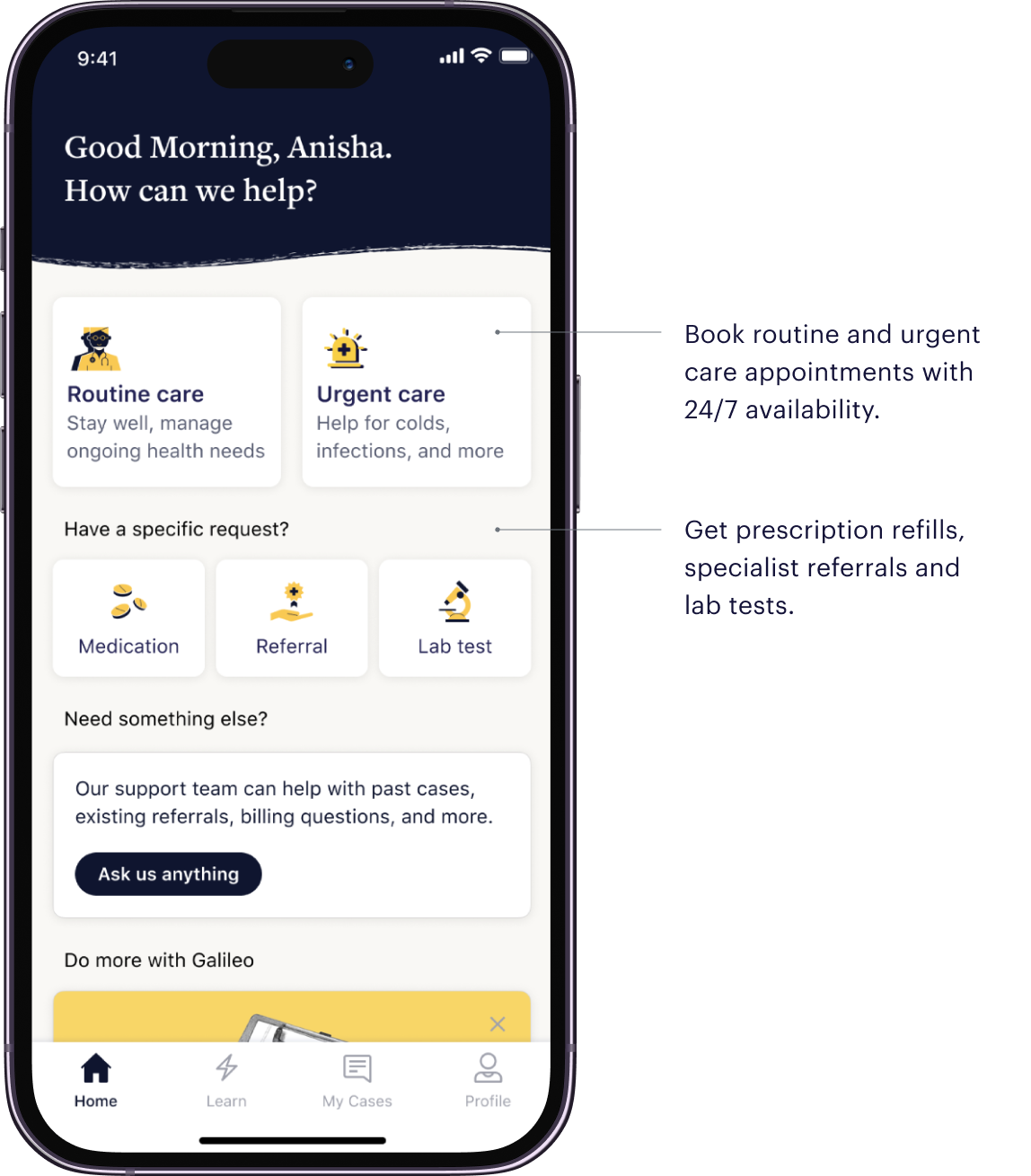
For frontline and diverse workforces, availability matters as much as coverage. Galileo gives employees 24/7, bilingual access to one coordinated care team across urgent, preventive, chronic, and mental health needs.
Connect with Galileo to explore how accessible, integrated care can address the health-related drivers of absenteeism across your workforce.

%20(1)%20(1).webp)
.webp)
.webp)
.webp)
.webp)


.webp)









%20(1).webp)
%20(1).webp)











.webp)