- Point solution fatigue describes the operational and clinical burden that results from managing too many single-purpose health tools that operate in isolation from one another.
- Large employers offer an average of more than 12 health-focused solutions to their employees, yet 76% of employees report not understanding their benefits, and only 10% actively use them.
- Fragmented care across disconnected point solutions leads to siloed medical records, missed diagnoses, duplicate testing, and lower member engagement, all of which drive up the total cost of care.
- The distinction between a point solution and an integrated platform is structural: platforms unify records, care teams, and clinical workflows across conditions rather than addressing each in isolation.
- Integrated virtual primary care programs that span urgent, preventive, chronic, and behavioral health have demonstrated an 11.5% reduction in total cost of care within six months.
- Consolidating around a comprehensive platform addresses the root cause of point solution fatigue: fragmentation itself.
For employers and health plans, the accumulation of single-purpose health tools has created a new category of operational problem. When each vendor addresses a narrow use case with no connection to the others, employees face a fragmented, confusing experience, and integrated care becomes impossible to deliver.
This guide examines what drives point solution fatigue, why it matters clinically and financially, and how organizations can move toward a more cohesive approach to workforce health.
What Is Point Solution Fatigue?
Each tool in a fragmented benefits portfolio addresses one narrow problem in isolation. Care becomes fragmented, medical records remain siloed, and employees manage multiple logins and inconsistent clinical experiences with no coordination between them.
Defining a Point Solution
A point solution is any healthcare tool or service designed to address a single condition or task. A standalone prescription renewal service, a diabetes-only management program, or an anxiety-only mental health application all qualify.
These tools can provide meaningful value in isolation, but when organizations accumulate too many without a unifying infrastructure, employees cannot determine which tool to use, HR teams spend significant time managing vendor relationships, and clinical data that could inform better decisions remains locked in separate systems. The cumulative effect is worse care at a higher cost.
Why Point Solutions Became the Default
Traditional healthcare was slow to access, expensive, and poorly designed for everyday use. Digital health companies identified specific gaps (inadequate daily support for chronic conditions, limited access to behavioral health, and cumbersome prescription management) and built targeted tools to address them.
Each solution addressed a genuine need, and employers embraced these tools because they offered measurable ROI on specific health issues. The problem was not any single point solution. It was an accumulation over time. Organizations continued adding tools without retiring old ones, and without any mechanism for integration.
The Real Cost of Fragmented Care
Fragmented care generates both clinical and financial harm, and the two are directly connected. Providers without shared records make worse decisions; worse decisions produce higher-cost outcomes.
Clinical Consequences
Medical records become scattered across systems with no shared data architecture. An employee managing anxiety through one application, treating a respiratory infection through a separate service, and seeing a primary care physician annually through a third may never have all three providers operating from the same clinical picture.
That fragmentation can lead to missed diagnoses, duplicate diagnostic testing, and conflicting treatment plans, all of which degrade care quality and patient safety.
Engagement declines predictably when employees face too many options with insufficient guidance. When the benefits landscape becomes sufficiently complex, employees default to what they know: the emergency room or urgent care center. That pattern drives up costs for everyone involved.
Financial Consequences
Each point solution carries its own contract, renewal cycle, and per-member-per-month fee. Across a portfolio of 10 or more vendors, these costs compound, often for programs with single-digit utilization rates.
Beyond direct program costs, the downstream financial impact of fragmentation is significant: avoidable ER visits, specialist overutilization, and delayed chronic condition management all generate claims that a coordinated care model would prevent.
Point Solution vs. Platform: Understanding the Difference
The distinction between a point solution and an integrated platform is structural. It determines whether a care model can deliver on its clinical and financial promises.
Point solutions excel at depth within a single condition or task. A diabetes management program designed by endocrinologists will offer specialized clinical features that a general health platform may not match. Platforms excel at breadth and integration.
When primary care, urgent care, behavioral health, and chronic disease management operate within one system with shared records and a unified clinical team, every provider has the complete patient picture. Employees have a single point of access for the full range of their health needs.
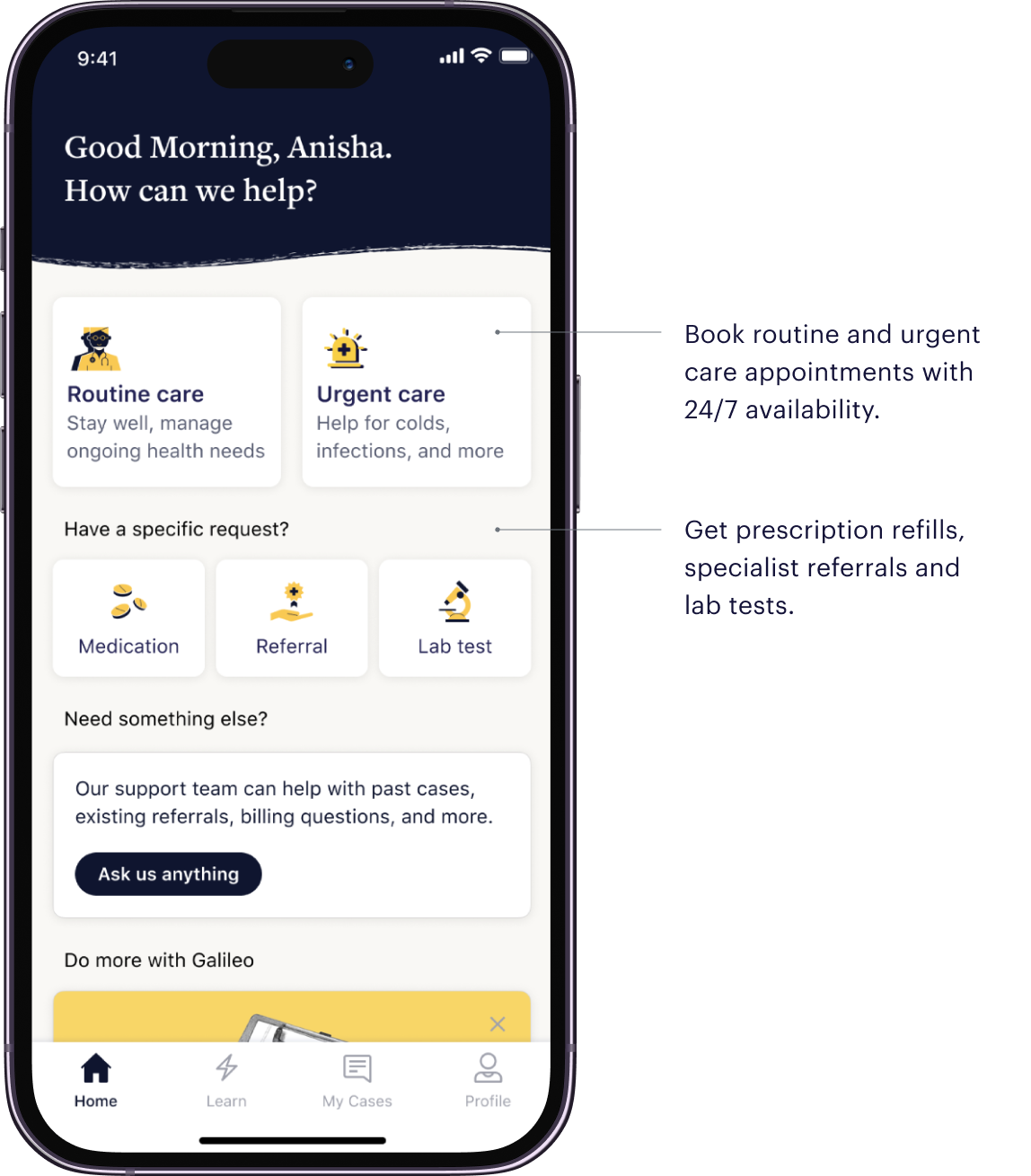
Integrated care models are gaining ground because they address the structural root cause of point solution fatigue. A virtual primary care model that spans urgent, preventive, mental health, chronic, and complex care through 24/7 text, video, and phone access with unified records eliminates the fragmentation that point solutions, by design, cannot.
Signs Your Organization Has Point Solution Fatigue
The following indicators suggest that fragmentation has become a measurable liability.
- Low engagement across multiple programs: If an organization is funding five or more health applications and employees are actively using only one or two, the portfolio has outgrown its utility. Spend is accumulating without proportional health or financial return.
- Rising costs despite digital health investment: When healthcare spending continues to climb despite a growing portfolio of point solutions, fragmentation is likely undermining the potential value of each individual tool.
- Employee confusion about benefits: When employees cannot identify which tool addresses their current health needs, the benefits program has become a liability. Confusion is a leading indicator of non-utilization.
- HR bandwidth consumed by vendor management: A disproportionate share of HR time spent on contract renewals, vendor performance reviews, and point solution onboarding is a structural sign that the portfolio has grown beyond what the team can manage effectively.
How Employers Can Reduce Point Solution Fatigue
Three actions address the root cause directly: audit what exists, apply integration discipline before adding anything new, and consolidate around a comprehensive platform.
Conduct a Portfolio Audit
Begin with a structured inventory of every health and wellness tool currently offered. Document the clinical scope of each, the contracted cost, and actual member utilization. This baseline assessment consistently reveals redundancies, low-utilization programs, and overlapping vendor relationships that can be consolidated or retired without reducing clinical coverage.
Prioritize Integration Before Addition
Before adding any new point solution, evaluate whether it integrates with existing systems and whether its clinical scope could be covered by a platform already in the portfolio. The discipline of integration-first evaluation prevents the accumulation pattern that produces point solution fatigue.
Consolidate Around a Comprehensive Platform
The most durable solution to point solution fatigue is consolidation around an integrated care platform. Galileo's employer care model delivers 24/7 multi-specialty virtual care alongside in-home and in-clinic services, with unified medical records and clinical intelligence tools that ensure every provider sees the complete patient picture. Galileo has demonstrated an 11.5% reduction in total cost of care within six months, with members over 70% less likely to require specialist appointments or ER visits.
For health plans, integrated virtual care partnerships offer a direct path to reducing fragmentation at the population level. Nationwide coverage in English and Spanish, delivered through text, video, and phone with comprehensive clinical coordination, supports both quality improvement and total cost of care objectives.
From Fragmentation to Integration
Organizations that have consolidated from fragmented point solution portfolios to integrated care models consistently report lower total cost of care, stronger member engagement, and reduced administrative burden.
The data from Galileo's employer partnerships reflects this directly: an 11.5% reduction in total cost of care within six months, and over 40% member engagement in populations where the majority of members are managing chronic conditions.
To learn how Galileo's integrated care model can replace fragmented point solutions in your benefits structure, contact the Galileo partnerships team.

%20(1)%20(1).webp)
.webp)
.webp)

.webp)
.webp)




.webp)












%20(1).webp)
%20(1).webp)












.webp)