- Average employer-sponsored premiums reached $9,325 for single coverage and $26,993 for family coverage, increases of 5% and 6%, respectively, year over year.
- Workers contribute 16% of the premium for single coverage and 26% for family coverage on average, with employers absorbing the remainder.
- Chronic conditions, deferred care, specialty drug costs, and healthcare labor inflation are the primary drivers of sustained premium growth.
- The most effective cost control strategies combine smart plan design with care delivery models that reduce avoidable ER visits, manage chronic conditions proactively, and improve member engagement.
- Integrated virtual primary care programs have demonstrated an 11.5% reduction in total cost of care within six months, driven by lower downstream utilization and earlier clinical intervention.
- Self-insurance and level-funded arrangements give larger employers greater claims visibility and more direct control over healthcare spending.
Managing employer healthcare costs has become one of the most consequential challenges facing HR leaders and benefits teams. According to the KFF 2025 Employer Health Benefits Survey, average premiums for employer-sponsored family coverage reached $26,993, a 6% increase over the prior year, while single coverage averaged $9,325.
This guide examines what is driving these costs, how spending breaks down at the per-employee level, and the strategies that produce the most durable results.
Why Employer Healthcare Costs Keep Rising
Premium increases are not uniform across the market. The factors driving them differ by employer size, workforce demographics, and plan design, and understanding them is a prerequisite to an effective response.
The Current Premium Landscape
The KFF survey placed average single premium growth at 5% and family premium growth at 6%, both outpacing inflation (2.7%) and wage growth (4%) over the same period.
The pressure is compounded by the convergence of several simultaneous cost drivers. Deferred care from prior years is now surfacing as higher-acuity claims. Specialty drug costs, particularly GLP-1 medications, continue to rise. And persistent inflation in healthcare labor markets keeps provider rates elevated. Large and small employers alike feel this pressure, though they experience it differently based on their risk pools and negotiating leverage.
How Premiums Are Split Between Employers and Employees
According to the KFF Employer Health Benefits Survey, covered workers contribute an average of 16% of the premium for single coverage ($1,440 annually) and 26% for family coverage ($6,850 annually), with employers absorbing the remainder. For single coverage, that means employers are covering roughly $7,885 per enrolled worker. For family plans averaging $26,993, employers are paying approximately $20,143.
The share employees contribute has remained relatively stable in recent years, but the absolute dollar amounts keep climbing as the premium base grows. Combined with rising deductibles and out-of-pocket maximums, the total financial burden on workers and the benefit costs that employers must sustain continues to expand.
Breaking Down Employer Healthcare Costs Per Employee
Understanding employer healthcare costs per employee enables meaningful benchmarking against industry peers and reveals where targeted interventions are most likely to reduce spend.
What Drives Per-Employee Costs
Several variables determine where an organization falls on the cost spectrum.
- Industry and workforce demographics. Sectors with older workforces or higher-risk job functions typically carry higher per-employee costs. Age is among the strongest predictors of claims experience.
- Geography. Healthcare prices vary substantially by market. The same procedure can cost several times more in one region than another, and local provider market concentration plays a significant role.
- Chronic condition prevalence. Employees managing conditions such as diabetes, hypertension, or heart disease account for a disproportionate share of total claims. The more prevalent these conditions are in a workforce, the higher the baseline cost.
- Plan design. Higher-deductible plans carry lower premiums but shift more costs to employees at the point of care. Richer plans provide stronger financial protection but at a higher premium cost. Network structure also matters: narrower networks typically produce lower premiums but constrain employee choice.
Single vs. Family Coverage Cost Gap
The gap between single and family coverage continues to widen. Per the most recent KFF data, family premiums averaged 2.9 times the cost of single coverage. Employees with families face particularly difficult trade-offs, often accepting higher deductibles to keep their paycheck contributions manageable.
Some employers have responded with tiered family coverage structures or defined contribution approaches that give employees more flexibility in selecting coverage levels. These designs can moderate employer cost exposure while preserving employee choice.
Strategies to Reduce Employer Healthcare Costs
The most effective approaches target both the demand side (how employees use care) and the supply side (how care is delivered and priced). No single lever is sufficient; durable results come from combining several strategies.
Leverage Integrated Virtual Primary Care
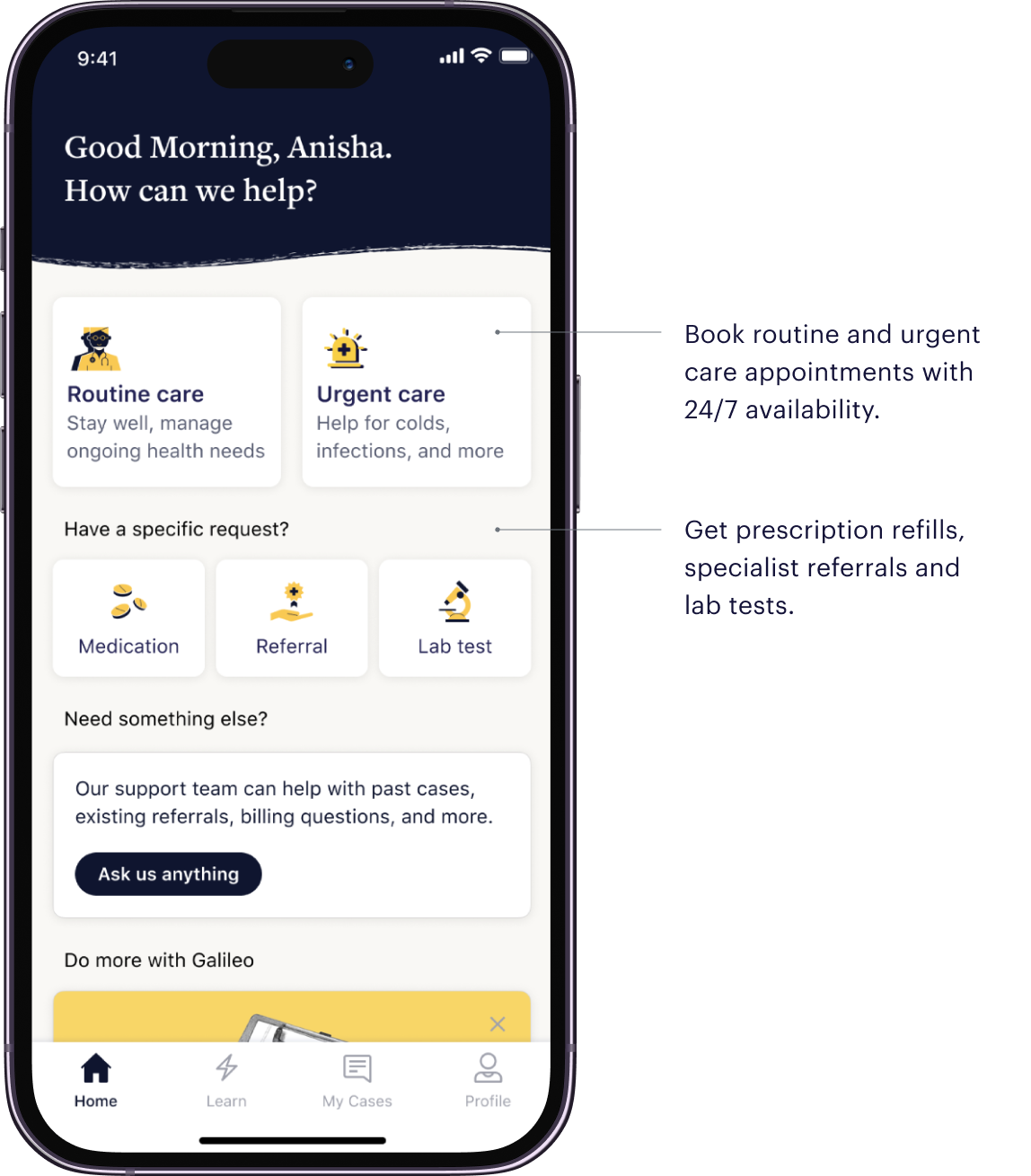
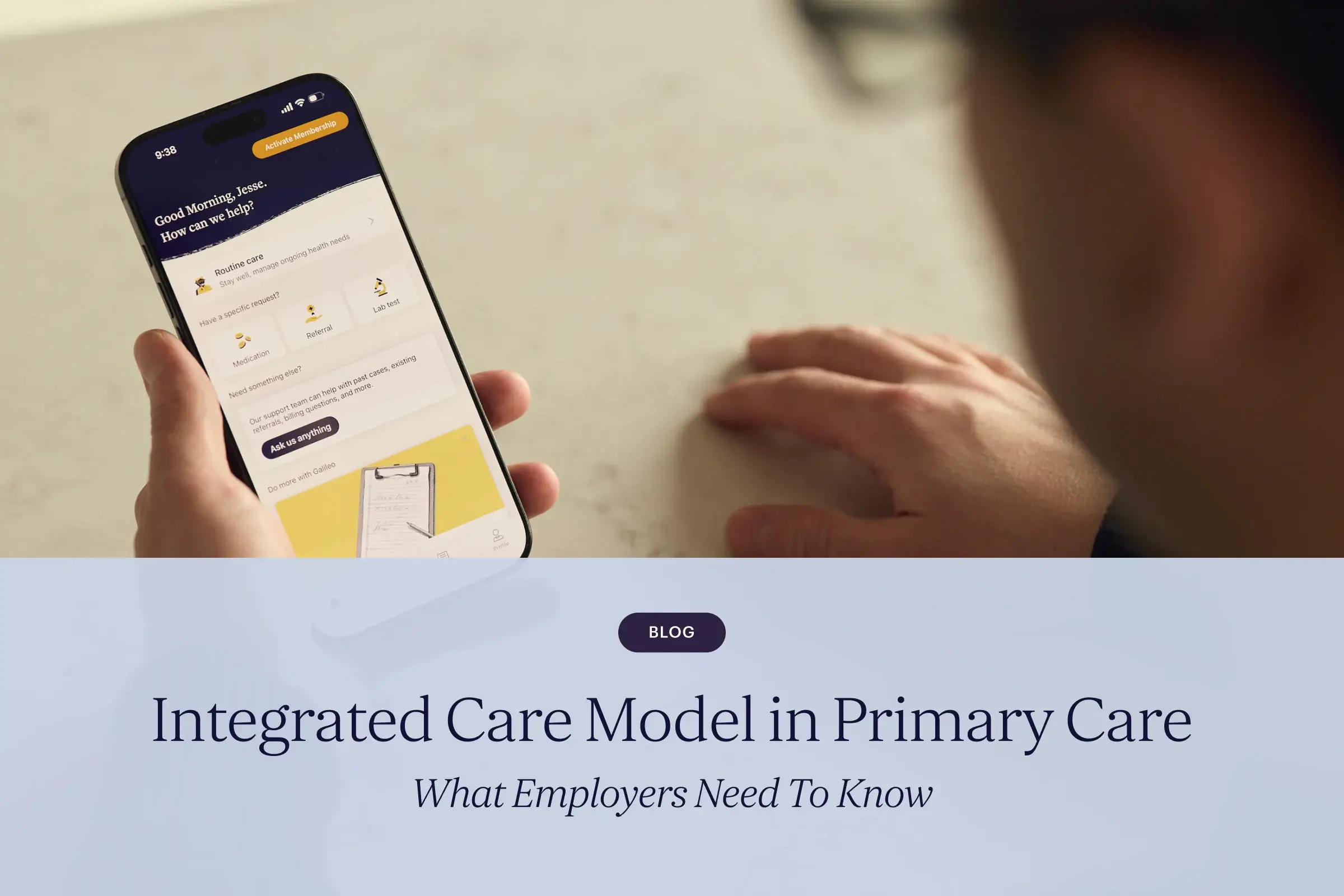
One of the most evidence-backed strategies for reducing employer healthcare costs is implementing an integrated, virtual primary care model. Programs that provide 24/7 access to clinical teams via text, video, and phone, in both English and Spanish, address everyday concerns, urgent needs, chronic conditions, and behavioral health through one coordinated platform.
Galileo has demonstrated an 11.5% reduction in total cost of care within six months of working with employers. Members are over 70% less likely to require specialist appointments or ER visits. When employees have reliable access to a clinical team that knows their history, low-acuity concerns are resolved before they escalate, and chronic conditions are managed proactively before they become costly acute episodes.
Implement Value-Based Benefit Design
Smart plan design steers employees toward high-value care without restricting their options. Reducing or eliminating cost-sharing for preventive services, generic medications, and evidence-based chronic condition treatments encourages appropriate utilization while discouraging low-value care.
Value-based insurance design (VBID) formalizes this logic: by calibrating cost-sharing to the clinical value of a service, employers influence utilization patterns in ways that improve outcomes and reduce waste. Centers of excellence programs, which direct employees to high-quality facilities for complex procedures, represent a related strategy with demonstrated cost and quality benefits.
Focus on Chronic Disease Management
Chronic conditions drive a disproportionate share of healthcare spending in virtually every employer population. A small portion of the population accounts for a large share of health spending in any given year, and those with ongoing chronic conditions are consistently overrepresented in that group. Employees managing diabetes, cardiovascular disease, hypertension, and similar conditions account for the majority of claims dollars in most employer health plans.
Effective chronic disease management programs reduce costly acute episodes through regular monitoring, medication adherence support, lifestyle coaching, and coordinated care. Behavioral health is integral to this: mental health conditions frequently co-occur with physical chronic diseases and can significantly undermine treatment adherence. Integrated care programs that address both dimensions together consistently produce better clinical and financial outcomes than those that treat them separately.
Explore Alternative Funding Arrangements
Self-insurance gives large employers direct control over healthcare spending and access to detailed claims data that fully-insured arrangements typically do not provide. Self-insured employers pay claims directly, purchasing stop-loss coverage to protect against catastrophic cases. This structure also provides flexibility to implement the care delivery innovations above without being constrained by carrier-designed networks and benefit structures.
For employers not ready for full self-insurance, level-funded plans offer a middle ground with more cost predictability and some of the data transparency benefits of self-insurance. Reference-based pricing, which reimburses providers at a defined percentage of Medicare rates, is a more aggressive alternative that can generate significant savings in markets where negotiated rates are particularly high.
Building a Sustainable Benefits Strategy
Cost control is not a one-time initiative. The following operating principles distinguish organizations that consistently bend the cost curve from those that address it only at renewal.
Lead with data: Understanding your population's health needs, utilization patterns, and cost drivers enables targeted interventions. Work with your insurer, broker, or benefits consultant to access and analyze claims data on a regular cadence, not just at renewal.
Engage employees as partners: When workers understand how healthcare costs affect their total compensation and how to navigate benefits wisely, engagement with high-value care increases. Transparent communication about the value of available benefits builds the trust that drives utilization.
Prioritize value over unit cost: The lowest-premium plan is not necessarily the best investment. Plans that provide accessible, high-quality care, actively manage chronic conditions, and address behavioral health needs often produce better long-term financial outcomes even at higher initial premium levels.
Making Employer Healthcare Costs Work Harder
The data is consistent: integrated virtual primary care, value-based benefit design, proactive chronic condition management, and evidence-based funding arrangements each reduce utilization and total cost of care.
Combined, they produce better health outcomes and a workforce that engages with care before problems escalate. For organizations ready to build that infrastructure, Galileo's employer solutions are designed to deliver measurable results from day one.

%20(1)%20(1).webp)
.webp)
.webp)

.webp)
.webp)




.webp)










%20(1).webp)
%20(1).webp)












.webp)