
- Chronic care management (CCM) is coordinated, between-visit support for people with two or more chronic conditions, including diabetes, hypertension, heart disease, COPD, and depression.
- Medicare CCM billing and employer or health plan CCM programs share clinical goals but operate under different funding and eligibility rules.
- An estimated 90% of the nation's $5.3 trillion in annual health care spending goes toward people with chronic and mental health conditions.
- Effective CCM works when it's embedded in a primary care relationship, not added as a separate point solution.
- The levers that move total cost of care for high-cost members are virtual primary care access, medication management, behavioral health integration, and proactive claimant identification.
- Galileo's model has shown an 11.5% reduction in total cost of care within six months, with members over 70% less likely to need specialist appointments or ER and urgent care visits.
Chronic conditions don't escalate all at once. They erode through gaps: the skipped medication, the unanswered question between appointments, the specialist who doesn't know the patient is already on three other medications. Most employees with diabetes, hypertension, or asthma aren't in crisis. They're just slightly out of reach of the consistent clinical relationship that would keep things from becoming one.
Galileo's position is that chronic care management should not exist as a program at all. It should be a core capability of advanced primary care: the same care team that handles an urgent concern also manages the ongoing condition, because both draw on the same longitudinal record and the same clinical relationship.
Treating CCM as a bolt-on service, run by a separate vendor with its own intake and its own login, recreates the exact fragmentation that lets chronic conditions drift toward crisis in the first place. That is the lens the rest of this piece uses: what CCM should look like when it is built into a continuous primary care relationship rather than layered on top of one.
What Is Chronic Care Management?
Chronic care management is coordinated, ongoing support for people with one or more long-term health conditions. Unlike episodic care, which addresses problems as they arise, CCM takes a proactive approach: preventing complications, closing care gaps, managing medications, and keeping people connected to their care team between appointments.
A CCM relationship typically starts with a comprehensive assessment of medical history, current medications, and recent labs, from which a care team builds a plan covering health goals, screenings, and medication protocols. The work that matters most, though, happens between visits. Care teams reach out proactively, monitor adherence, and answer questions before they become urgent, rather than waiting for the next scheduled appointment to catch a problem.
Conditions That Qualify
For Medicare CCM billing, CMS requires patients to have two or more chronic conditions expected to last at least 12 months or until death, placing the patient at significant risk of death, acute exacerbation, decompensation, or functional decline. Qualifying conditions include, but are not limited to, diabetes, hypertension, cardiovascular disease, COPD, asthma, depression, chronic kidney disease, cancer, and Alzheimer's disease and related dementia.
For employer and health plan chronic care management programs operating outside the Medicare billing framework, eligibility is typically defined by risk stratification rather than specific diagnostic codes. Members with two or more chronic conditions, recent hospitalizations, high medication burden, or evidence of poor disease control are the priority population, regardless of Medicare status.
CMS CCM Billing vs. Employer and Health Plan Programs
These are distinct but related frameworks. Medicare CCM billing (CPT codes 99490, 99439, 99491, 99437, and complex codes 99487, 99489) creates a reimbursable structure for eligible practitioners managing Medicare beneficiaries with multiple chronic conditions outside of face-to-face visits.
Physicians, nurse practitioners, clinical nurse specialists, and certified nurse midwives are among the practitioners CMS permits to bill these codes, and CMS requires documented patient consent before billing, a certified electronic care plan, and ongoing 24/7 access to a care team.
Employer and health plan CCM programs aren't CMS-billed programs. They're care delivery arrangements structured to manage chronic conditions proactively across a covered population, funded through the employer plan or health plan contract rather than Medicare fee-for-service billing. The clinical goals overlap directly with Medicare’s CCM requirements, particularly the 24/7 access standard, but the funding mechanism and eligible population differ.
Why the Traditional Model Fails Chronic Conditions
The standard model of chronic care isn't coordinated. It's sequential. An employee with hypertension sees a primary care doctor once a year. Their cardiologist doesn't know what the PCP prescribed. Their behavioral health support sits in a separate system with no shared record. When something changes between visits, there's often no mechanism to notice.
That design produces predictable failures:
- Medication adjustments wait for the next scheduled appointment, even when lab results show the current dose isn't working.
- Specialist referrals generate follow-up care the primary care team never hears about.
- Behavioral health needs go unaddressed because there's no connection between the mental health benefit and the clinical team managing the physical condition.
- Patients managing multiple conditions are left to coordinate their own care across providers who don't share information.
The result is avoidable hospitalizations, unnecessary ER visits, and chronic conditions that progress further than they should. It's the predictable output of a system designed around acute, single-episode care applied to conditions that require something fundamentally different.
Tactical Levers for Managing High-Cost Members
For employers and health plans, CCM isn't a single program. It's a set of clinical capabilities that work together to keep complex members out of high-cost settings. Four levers consistently move the needle.
High-cost Claimant Identification
Claims and pharmacy data can identify members trending toward expensive events before they arrive: rising medication burden, frequent ER visits, labs trending in the wrong direction, or a recent hospitalization with no documented follow-up. The value isn't the identification. It's whether that identification connects to an actual clinical response.
Virtual Primary Care As The CCM Hub
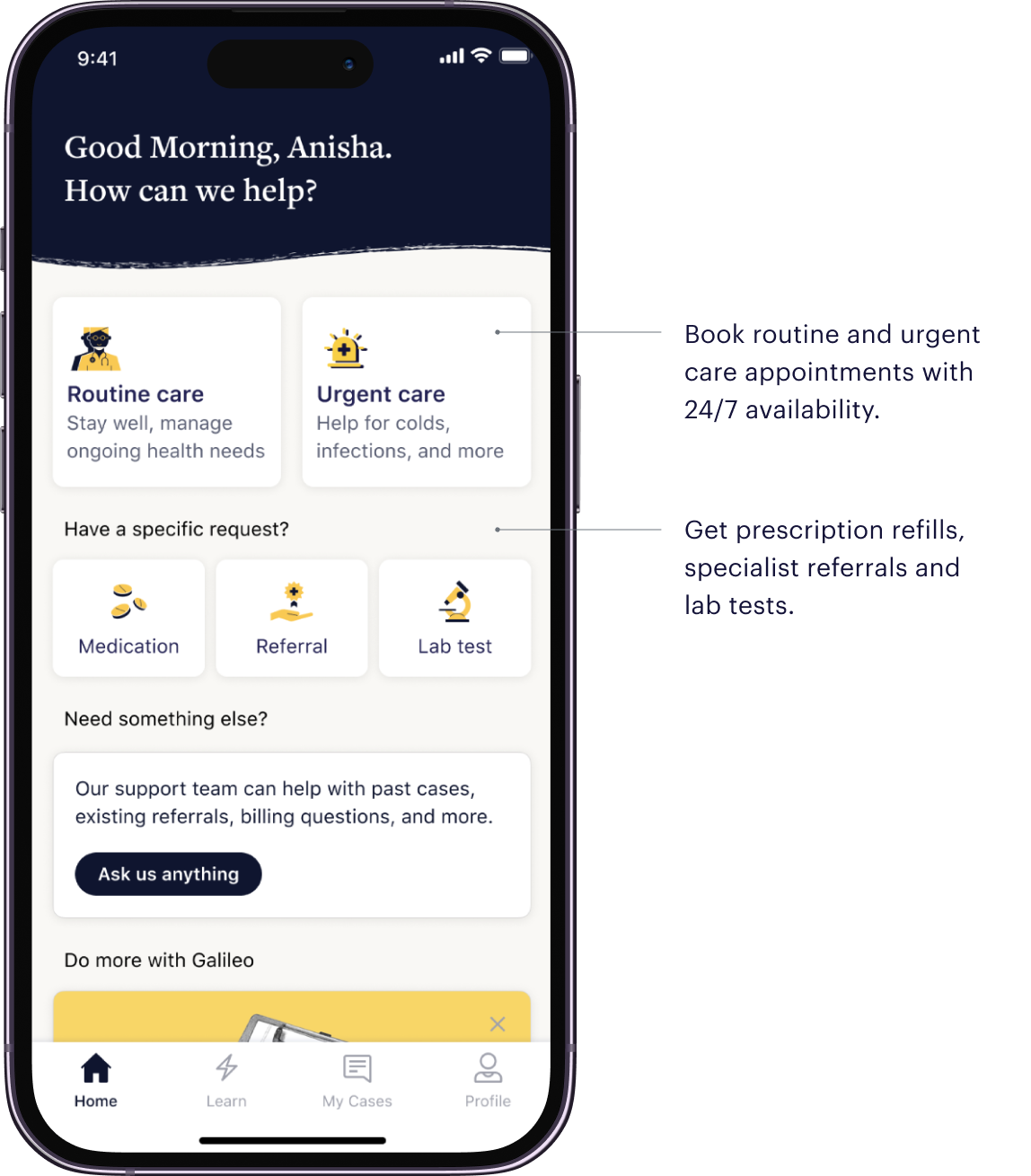
When members with chronic conditions can reach a care team by text, video, or phone 24/7, the small questions that would otherwise wait until the next scheduled appointment get answered before they escalate. A member on three blood pressure medications can get a medication question answered at 8 p.m. rather than defaulting to urgent care. That friction removal is what drives the utilization difference in coordinated CCM programs: Galileo's members are over 70% less likely to require specialist appointments or ER and urgent care visits, a result that comes from this upstream accessibility rather than from authorization management alone.
Medication Management
Poorly managed medications are one of the most consistent drivers of avoidable hospitalizations in populations with chronic conditions. Consistent medication review, refill outreach, and reconciliation after specialist visits or hospitalizations prevent the drift that turns a manageable condition into an acute one.
Behavioral Health Integration
Depression and anxiety are significantly more common among people managing chronic physical illness than in the general population. One multi-disease study found depression nearly three times as frequent among patients with chronic conditions as among healthy controls. Left unaddressed, that comorbid burden consistently worsens chronic condition control.
When behavioral health is integrated into the same care team handling physical conditions, rather than routed to a disconnected mental health vendor with no shared record, both conditions improve. Galileo resolves the large majority of clinical needs, including behavioral health concerns, in-house rather than through an external referral or a separate point solution.
Virtual vs. In-Person CCM: What the Difference Actually Means
The comparison matters for self-funded employers and health plans evaluating their options, but it's less about modality and more about continuity.
For most chronic conditions, virtual CCM built inside a continuous primary care relationship produces comparable clinical outcomes to in-person coordination, with significantly fewer access barriers, broader population coverage, and better measurement of results. For populations with complex, high-acuity needs, the strongest models layer in-home support on top of virtual access rather than treating the two as alternatives.
What Effective Chronic Care Management Looks Like in Practice
Effective CCM isn't about enrollment numbers or monthly touchpoint counts. It's about whether conditions are stable, whether problems are caught early, and whether the people managing the most complex conditions trust their care team enough to reach out when something changes.
The characteristics that distinguish programs that work from programs that exist:
- One care team with a longitudinal record, not separate vendors managing separate conditions with no shared context.
- Behavioral health integrated into the same relationship, not routed to a standalone mental health app that doesn't share data with the clinical team managing the physical conditions.
- Proactive outreach that doesn't wait for the patient to initiate, especially for patients who are out of labs, overdue for screenings, or whose medication hasn't been refilled.
- Specialist involvement as a deliberate clinical decision, not a default referral when primary care runs out of time.
Galileo's model is built around these characteristics. Its value-based care approach combines virtual, in-home, and in-clinic care across primary, urgent, chronic, and behavioral health needs, with one team holding the full picture. Across employer and health plan partnerships, that model has produced an 11.5% reduction in total cost of care within six months.
Implementing Chronic Care Management in Your Organization
Not every patient needs intensive chronic condition management, so targeting the right population matters. Members with two or more chronic conditions benefit most from structured CCM, and those with recent hospitalizations, high medication burden, or evidence of poor disease control are priority candidates.
Claims and pharmacy data can identify this group before they generate a catastrophic claim. Risk stratification that connects that identification to a care management response is the difference between a UM report and a CCM program.
Few organizations have the internal capacity to build CCM programs from scratch. When evaluating partners, the relevant questions are about integration and continuity: does chronic condition management happen inside the primary care relationship, or as a parallel program? Does the care team have access to the full clinical record? Can it manage acute and preventive needs alongside chronic conditions, or only one at a time?
Fragmented vendor stacks tend to produce exactly the coordination gaps CCM exists to close, which is why the partners that produce durable cost results function as extensions of the care strategy rather than as disconnected programs running alongside it.
Build CCM Into the Care Model, Not on Top of It
The difference between chronic care management that works and chronic care management that exists is whether it's embedded inside a continuous clinical relationship or layered onto an already fragmented system.
When the same team that handles a member's urgent concern on a Tuesday night also knows that member has diabetes and an A1C trending in the wrong direction, that's chronic care management doing what it's supposed to do. When a separate chronic condition vendor sends a monthly check-in call to someone who just had an ER visit because their primary care team didn't know their medication wasn't working, that's a program that looks like CCM but doesn't function like it.
Galileo's employer and health plan partnerships are built around the first model: one care team, one record, continuous clinical ownership across every kind of need.

%20(1)%20(1).webp)
.webp)
.webp)

.webp)




.webp)











%20(1).webp)
%20(1).webp)











.webp)






.webp)