Key Takeaways
- Most sore throats get better with rest, but certain symptoms—like high fever, severe pain, or trouble swallowing—require urgent care.
- Viral infections are the most common cause; strep throat is bacterial and requires antibiotics.
- Urgent care is recommended when symptoms worsen, last more than a few days, or interfere with eating or breathing.
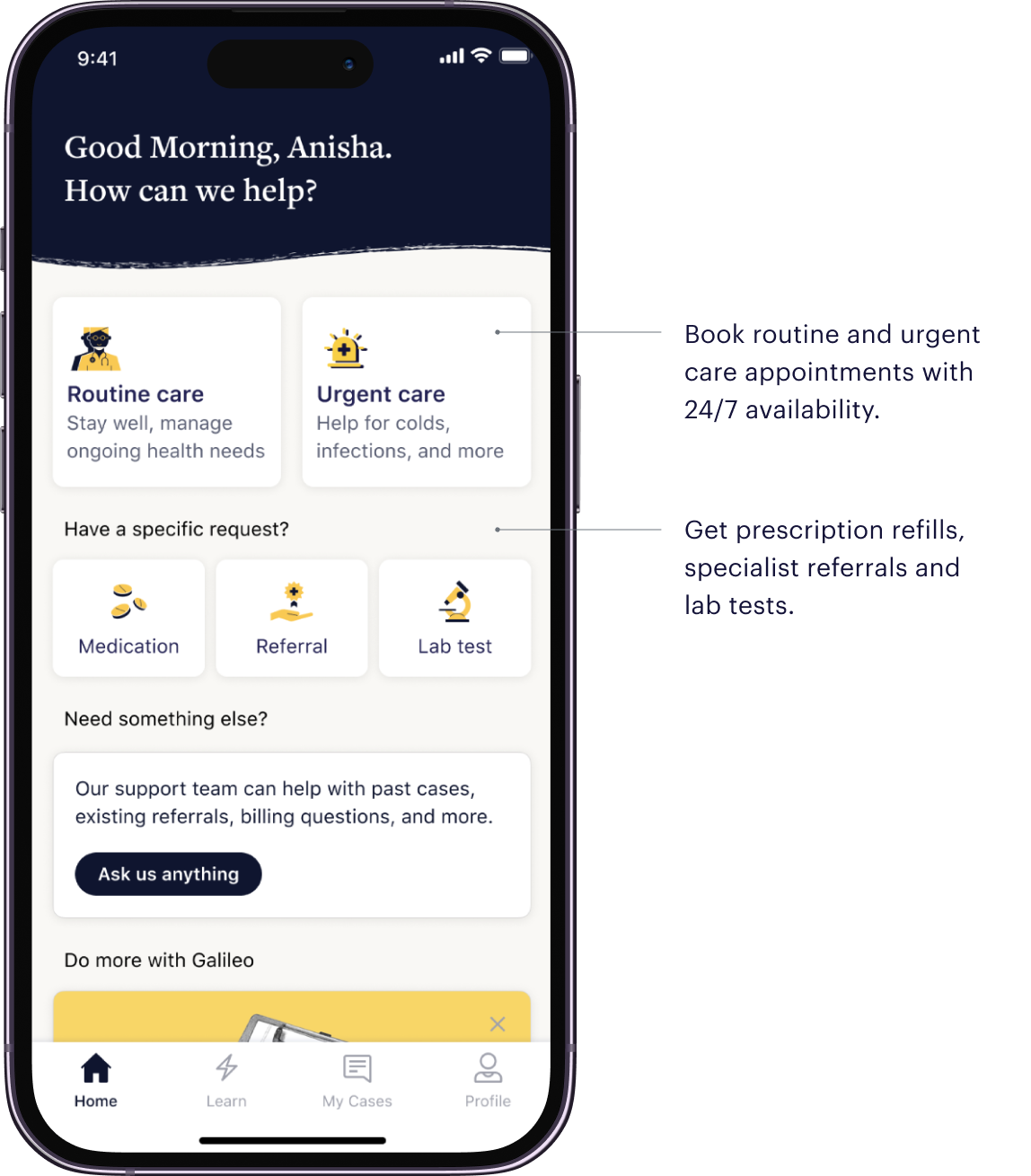
- Galileo clinicians can assess symptoms 24/7, prescribe treatment, and guide you to in-person care when needed.
- Same-day virtual visits through the Galileo app help you manage symptoms safely without unnecessary clinic visits.
Over 13 million Americans visit urgent care centers each year for throat-related problems. A sore throat can range from a minor annoyance to a sign of something more serious, and knowing when to seek urgent care for sore throat symptoms can save both time and unnecessary worry. Most sore throats resolve on their own within a few days, but certain warning signs indicate it's time to seek professional medical attention.
Virtual urgent care visits can effectively diagnose many sore throat cases through video consultations, where doctors can visually examine the throat and assess symptoms.
Understanding When to Go to Urgent Care for a Sore Throat
Sore throats often start with scratchiness or pain when swallowing. Many improve with rest, but some symptoms indicate a higher chance of bacterial infection or complications and shouldn’t be ignored.
Red Flag Symptoms That Need Immediate Attention
Some symptoms indicate a higher likelihood of bacterial infection or complications. Seek same-day care if you experience:
- Fever above 101°F
- Severe throat pain lasting more than 48 hours
- Trouble swallowing food, liquids, or saliva
- White patches or pus on the tonsils
- Blood in saliva or mucus
- Firm or rapidly enlarging lymph nodes
- Sore throat with rash or stiff neck
- Difficulty opening your mouth
- Ear pain or joint pain with a sore throat
These can signal strep throat, tonsillitis, mononucleosis, or a deeper infection that requires prompt evaluation.
Viral vs. Bacterial Sore Throats
Viral infections (most common)
Viruses such as the cold, flu, mononucleosis, and COVID-19 cause most sore throats. Symptoms often include:
- Scratchy or irritated throat
- Runny nose
- Cough
- Mild fever
- Hoarse voice
These usually improve within a week. Antibiotics won’t help viral infections.
{{blog-image}}
Bacterial infections (like strep throat)
Strep throat causes more sudden and intense symptoms:
- Severe throat pain
- Fever
- Swollen tonsils with white patches
- Painful lymph nodes
- No cough
Common Causes of Sore Throats
Sore throats come from a range of causes, and knowing the difference helps you understand when home care is enough and when urgent evaluation matters.
Viral infections
Viruses are the most common cause. Colds, the flu, mononucleosis, and COVID-19 can all lead to throat irritation along with congestion, body aches, or fatigue. Symptoms usually peak around day three and improve on their own within a week. Antibiotics don’t help with viral infections; treatment focuses on comfort and hydration.
Strep throat and other bacterial infections
Bacterial infections are less common but often more painful. Strep throat typically appears suddenly with significant throat pain, fever, and swollen tonsils with white patches. These infections require antibiotics to prevent complications. Conditions like tonsillitis or peritonsillar abscess can also cause more intense, one-sided pain or difficulty opening the mouth.
Allergies and acid reflux
Not all sore throats are infectious. Seasonal allergies can cause postnasal drip that irritates the throat, while acid reflux may lead to burning or chronic throat discomfort, especially in the morning or after lying down. Treating the underlying cause usually brings relief.
Severe Symptoms That Need Urgent Medical Attention
Most sore throats improve on their own, but some sore throat symptoms signal a more serious condition and should be evaluated right away. Knowing these red flags helps you act quickly and avoid complications. Galileo clinicians are available 24/7 to assess symptoms and guide you to in-person care when needed.
High fever and difficulty swallowing
A high fever paired with throat pain can point to a bacterial infection. Adults with fevers above 103°F (or children with fevers that stay above 101°F) should be evaluated promptly. If you can’t swallow liquids or your own saliva, this may indicate a peritonsillar abscess or significant swelling that needs urgent treatment.
Swollen lymph nodes and severe throat pain
Tender, movable lymph nodes are common during infections. But hard, fixed, or rapidly enlarging nodes deserve urgent attention. Severe pain that radiates to the ears, prevents eating or drinking, or causes difficulty opening your mouth can signal an abscess that needs immediate care.
When breathing problems become an emergency
Any trouble breathing with a sore throat is a medical emergency. Warning signs include noisy breathing (stridor), drooling because you can’t swallow, leaning forward to breathe more easily, or blue-tinged lips or fingers.
When Should I Visit Urgent Care for a Sore Throat vs. Waiting at Home?
Most sore throats improve with simple home treatments. But you should consider urgent care when:
- Symptoms last more than 3–5 days
- Fever is present
- Pain is significant
- You see white patches on your tonsils
- Swollen glands make it difficult to swallow
If symptoms are mild and improving, resting at home with fluids, a humidifier, and over-the-counter relief is usually safe.
If you’re unsure, a Galileo clinician can help determine whether urgent care is appropriate.
What Happens During an Urgent Care Visit
Physical exam
Clinicians check:
- Tonsils for swelling or patches
- Throat inflammation
- Lymph nodes
- Signs of abscess or tonsillitis
Antibiotic decisions
Antibiotics are only prescribed when a bacterial infection is confirmed or strongly suspected.
Can Virtual Urgent Care Diagnose A Sore Throat?
Yes. Most sore throats can be accurately evaluated through virtual visits.
Galileo clinicians can:
- Assess symptoms through chat or video
- Guide a safe self-exam
- Prescribe medications when appropriate
- Recommend in-person care if a hands-on exam is needed
Virtual care saves time and helps avoid unnecessary clinic visits.
When home remedies aren't enough
Home treatments work well for mild symptoms, but knowing their limits is important. If your sore throat lasts longer than a week despite home care, it's time for a professional evaluation. Worsening symptoms after initial improvement might indicate a secondary infection requiring treatment.
A persistent sore throat lasting more than two weeks could signal non-infectious causes needing different management approaches. Virtual care platforms offer convenient ways to get professional opinions when you're unsure whether home treatment suffices.
How Galileo Makes Sore Throat Care Easier Online
Through the Galileo app, clinicians can:
- Evaluate symptoms virtually
- Order rapid strep or throat cultures
- Prescribe antibiotics when appropriate
- Provide same-day visits
- Send e-prescriptions
- Offer follow-up guidance
Virtual care helps you avoid unnecessary clinic visits while ensuring you receive timely, evidence-based treatment.
A Clear Path to Feeling Better
Most sore throats improve with simple care, but certain symptoms require medical attention. Urgent evaluation is appropriate when fever, severe pain, or difficulty swallowing are present. With 24/7 access to clinicians, same-day orders, and evidence-based treatment, Galileo helps you manage symptoms safely and confidently.
If you’re unsure whether your sore throat needs medical attention, start a visit in the Galileo app for quick guidance and the right next steps.

%20(1)%20(1).webp)

.webp)














%20(1).webp)
%20(1).webp)












.webp)