- Colds typically resolve within 7 to 10 days. Symptoms lasting beyond 10 days, or that improve and then worsen, suggest a sinus infection rather than a lingering cold.
- Thick yellow or green mucus and localized facial pressure are more consistent with sinusitis than a cold.
- The CDC notes that flu symptoms come on suddenly and include higher fever and more significant body aches than either a cold or sinus infection.
- Antibiotics treat bacterial sinus infections but do not affect viral colds or flu. Getting the right diagnosis matters before starting treatment.
- Shortness of breath, severe headache with neck stiffness, or high fever with confusion all warrant a same-day medical evaluation.
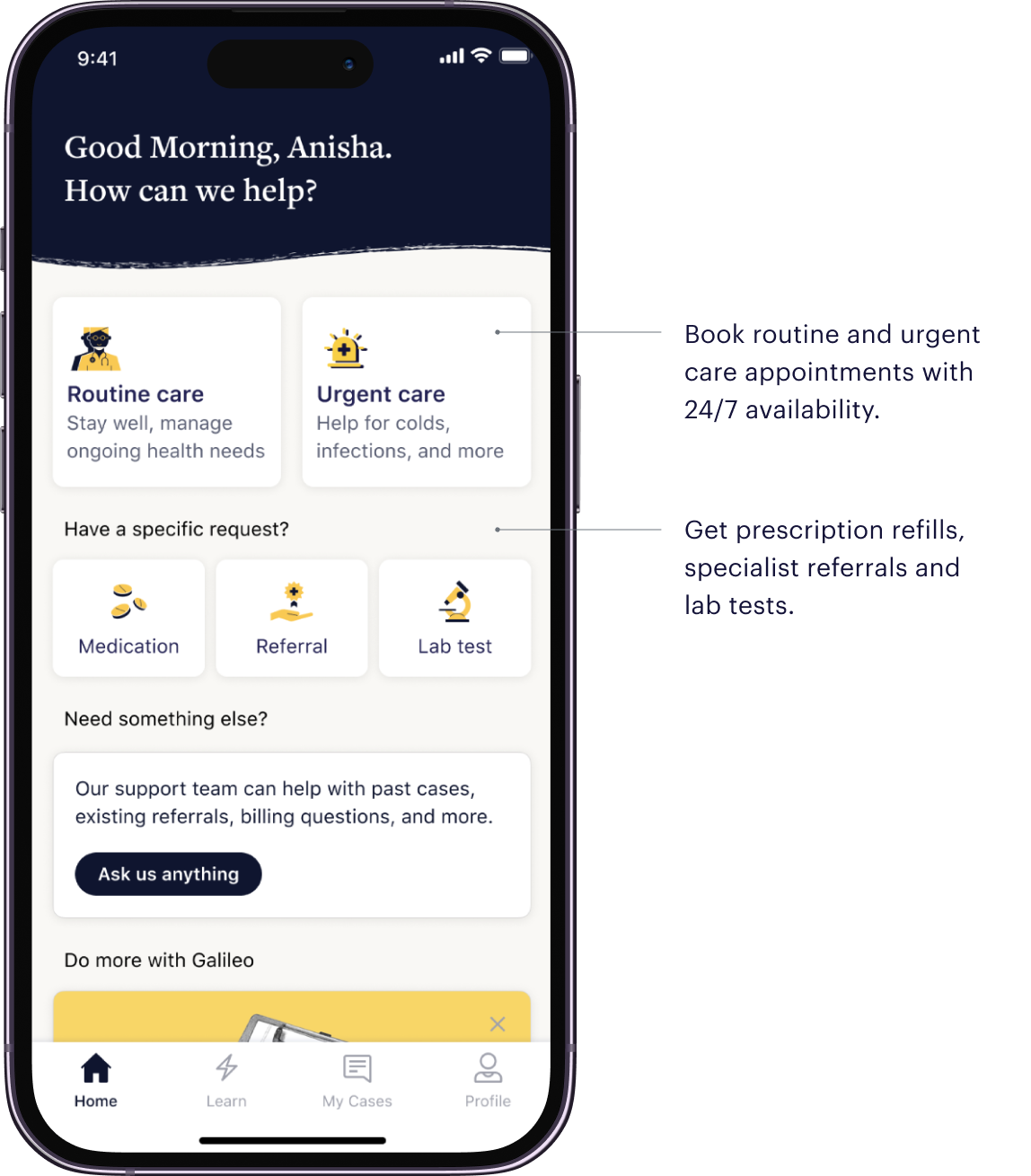
- A Galileo clinician is available 24/7 by phone or video to evaluate your symptoms, determine what you're dealing with, and prescribe treatment when it's needed.
That stuffy nose and persistent pressure around your eyes could mean a lot of things. Most people assume it's a cold and wait it out, which is often the right call. But sometimes what starts as a cold develops into something that actually needs treatment, and knowing the difference saves you from either over-treating a virus or under-treating a bacterial infection.
A cold, a sinus infection, and the flu can all look similar in the early stages. The patterns that distinguish them, including how quickly symptoms come on, how long they last, and exactly where they hurt, are the most useful diagnostic clues. Understanding those patterns helps you decide when to rest and when to get evaluated.
When symptoms don't fit a clear pattern or aren't improving the way they should, a Galileo clinician can evaluate you by phone or video the same day and give you a direct answer on what you're dealing with.

Key Symptoms of a Sinus Infection
Sinusitis occurs when the lining of the sinuses becomes inflamed, often following a cold, and fluid gets trapped in the sinus cavities. The most important diagnostic sign isn't any single symptom; it's persistence.
According to the CDC, you should see a healthcare provider if symptoms last more than 10 days without getting better, or if they get worse after initially improving. For many people, that evaluation doesn't require an in-person visit. Online sinus infection treatment through a virtual care platform means you can get assessed and treated the same day without leaving home.
Facial pressure and sinus pain
That pressure around your nose, eyes, and forehead that comes with sinusitis is distinct from ordinary congestion. It tends to worsen when you bend forward or lie down, and often concentrates on one side of the face, particularly around the cheekbones and upper teeth.
This localized pressure, rather than general stuffiness, is one of the clearest signs that the sinuses are involved. Per the American Academy of Family Physicians, facial pain or pressure that intensifies when bending forward is among the most characteristic findings of acute sinusitis.
Thick yellow or green mucus
Clear discharge is common with allergies and early viral colds, but yellow or green mucus can also occur with a viral infection and does not by itself mean bacteria. Bacterial sinusitis is more likely when symptoms are not improving after 10 days, or when they improve and then worsen again.
Symptoms lasting more than 10 days
The 10-day mark serves as a crucial diagnostic threshold. Most viral colds resolve or significantly improve within a week. If symptoms are still present after 10 days without improvement, or if they improved and then worsened, that pattern is consistent with acute bacterial sinusitis.
This timing helps determine whether antibiotics may be necessary, since viral infections won't respond to them, but bacterial infections often do.
Common Cold Symptoms To Watch For
Colds are caused by viruses, most commonly rhinoviruses, and follow a predictable pattern. Symptoms build gradually over one to two days, peak around day three or four, then steadily improve. By day seven, most people feel significantly better, though a lingering cough can persist for another week.
Runny nose and nasal congestion
Cold discharge typically starts clear and watery and stays that way throughout the illness, unlike the thick, colored mucus associated with sinus infections. Nasal congestion results from inflammation in the nasal passages as the body fights the virus. Saline rinses can help thin mucus and provide temporary relief without medication.
Sore throat and mild cough
A scratchy, irritated throat is often the first sign of a cold, usually lasting two to three days. It results from postnasal drip irritating the throat tissues. The accompanying cough tends to be dry or produce minimal, clear phlegm, milder than the deep cough of bronchitis or the persistent cough of flu, and improves as other symptoms resolve.
Symptoms that peak within days
Cold symptoms follow a predictable arc. They build gradually over one to two days, peak around days three to four, then steadily improve. By day seven, most people feel significantly better, though a lingering cough might persist for another week.
This timeline helps distinguish colds from sinus infections, which either don't improve or worsen after that initial week. Virtual urgent care services with clinical intelligence platforms can assess whether you need additional treatment if symptoms don't follow this typical pattern.
Cold vs Sinus Infection vs Flu Differences
The flu is worth distinguishing from both colds and sinus infections because it carries a higher risk of serious complications, particularly for older adults and people with chronic health conditions.
How flu symptoms appear suddenly
According to the CDC, flu symptoms usually come on suddenly, unlike colds and sinus infections, which develop more gradually. Fever, chills, and significant body aches can appear within hours. Flu fever typically exceeds 101°F and lasts three to four days. The fatigue associated with flu is also distinct; it can be severe and persist well beyond when other symptoms have resolved.
When facial pressure means sinusitis
Mild stuffiness is common with colds, but the facial pressure of sinusitis is more specific. Per the Cleveland Clinic, it tends to localize around particular sinus cavities, including the cheeks, the area around and behind the eyes, and the forehead, and intensifies when bending forward or lying flat. That combination of targeted pressure, thick discharge, and duration beyond 10 days is what distinguishes sinusitis from a cold that's just running long.
Duration and severity comparisons
- Cold: 7 to 10 days, mild to moderate symptoms, rarely prevents normal activity
- Sinus infection: Beyond 10 days, or symptoms that worsen after initial improvement; significant facial discomfort, but without the systemic exhaustion of flu
- Flu: Sudden onset, peaks in the first three to four days, but fatigue can linger for two weeks or more
When To See Your Healthcare Provider
Most colds resolve without medical intervention. But certain symptoms indicate that an evaluation is warranted, either because a bacterial infection may need treatment or because symptoms suggest something more serious.
When those symptoms show up, seeing a provider doesn't have to mean taking time off work or sitting in a waiting room. A virtual healthcare provider like Galileo can evaluate your symptoms by phone or video the same day, often with faster access than a traditional in-person appointment.
Warning signs of bacterial sinusitis
The CDC recommends seeing a healthcare provider if you have:
- Symptoms lasting more than 10 days without improvement
- Symptoms that improved and then worsened again
- Severe facial pain or headache that doesn't respond to over-the-counter pain relievers
- Fever above 102°F lasting more than three to four days
Symptoms that need immediate care
Seek same-day medical care for:
- Difficulty breathing or shortness of breath
- Severe headache with neck stiffness
- High fever accompanied by confusion or altered mental status
- Swelling around the eyes
These are uncommon but represent potential complications that need timely evaluation.
How virtual visits can help diagnose
Many sinus infections and colds can be accurately assessed through a phone or video visit. A clinician can evaluate your symptom pattern, ask about duration and progression, and determine whether a bacterial infection is likely. When antibiotics are appropriate, they can prescribe them with same-day pickup at your preferred pharmacy. When they're not, as is the case with most sinus infections early on, they'll walk you through what actually helps and what to monitor.
Through the Galileo app, you can connect with a clinician by phone or video the same day symptoms start. Download the app, create an account, and request a virtual medical visit. From there, a Galileo clinician can:
- Assess your symptom pattern and health history to determine the likely cause
- Distinguish between a viral cold, bacterial sinusitis, and flu based on duration, onset, and specific symptoms
- Order tests if needed and direct you to a local facility
- Prescribe antibiotics when clinically appropriate for sinus infection treatment, with same-day pickup at your preferred pharmacy
- Recommend the right over-the-counter options for symptom relief and what you can skip
The Right Diagnosis Makes the Difference
Most upper respiratory illnesses are straightforward once you understand the pattern. A cold runs its course. A sinus infection that crosses the 10-day mark or doubles back after improving is worth getting evaluated. And flu, particularly for anyone at higher risk of complications, is worth treating early.
When your symptoms don't fit a clear pattern or aren't improving the way they should, getting an accurate read from a clinician is faster and more reliable than waiting it out.
Download the Galileo app, create an account, and request a virtual medical visit. A clinician is available 24/7 to assess your symptoms, determine whether treatment is needed, and get you started on the right plan the same day.

%20(1)%20(1).webp)

.webp)













%20(1).webp)
%20(1).webp)













.webp)