
Key Takeaways
- Most stomach pain is mild and related to digestion, but symptoms like severe pain, high fever, or vomiting blood require urgent care.
- Common causes include gas, constipation, food poisoning, stomach bugs, menstrual cramps, and acid reflux.
- Virtual urgent care providers can assess stomach pain through detailed symptom review, guided self-exams, and medical history via phone or video visits.
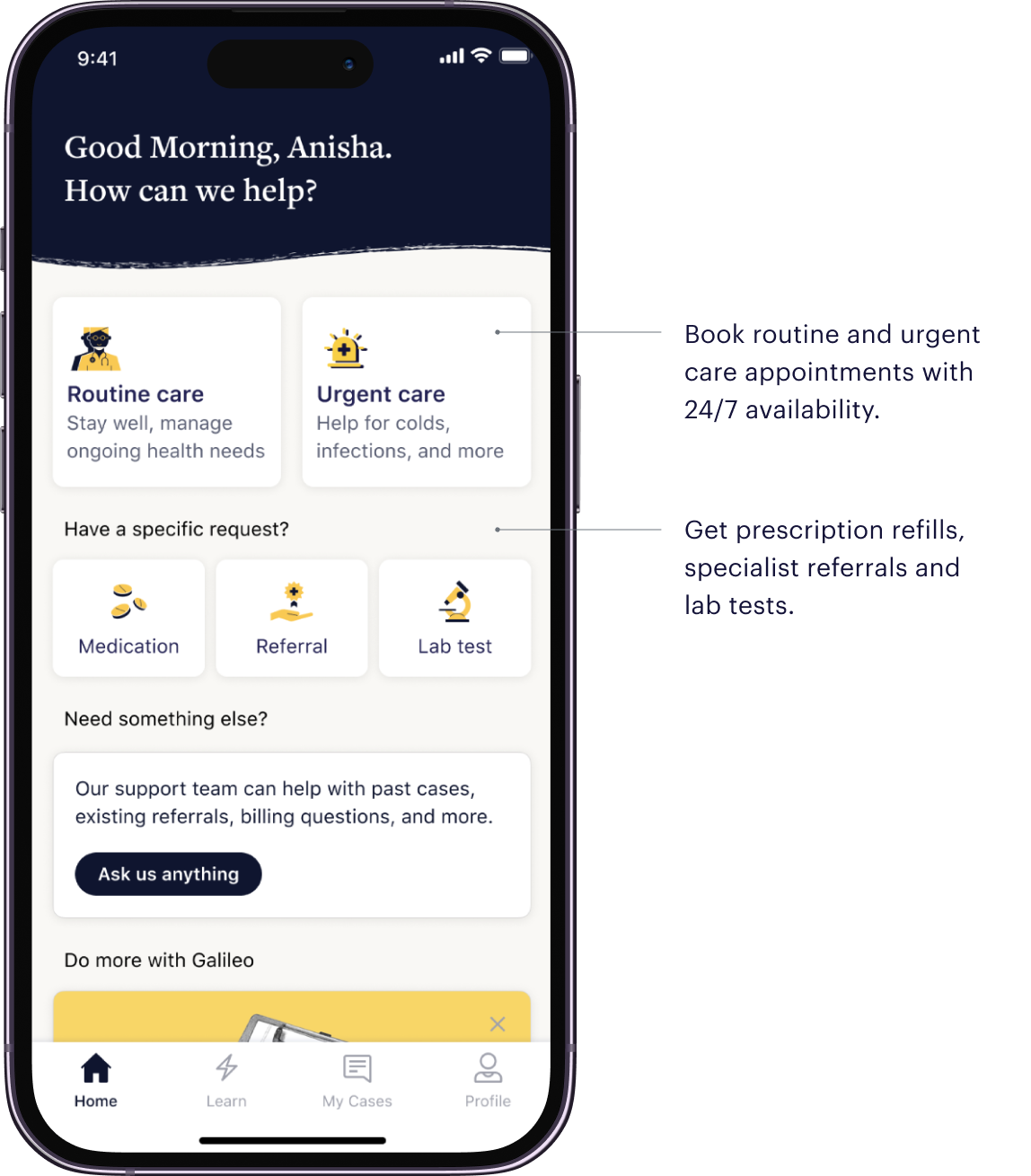
- Galileo offers same-day virtual visits for insured and uninsured patients, with prescriptions and lab orders when appropriate.
Stomach pain strikes at the worst times–whether during work, late at night, or on weekends when your regular doctor may be unavailable. Many patients reach out in those situations because they’re unsure whether their symptoms are simple digestive discomfort or something more serious.
Most mild stomach issues improve with rest and over-the-counter remedies, but certain warning signs require medical attention. Urgent care becomes important when stomach pain is paired with fever above 101°F, persistent vomiting, blood in stool or vomit, severe dehydration, or worsening pain. These symptoms can signal conditions that need prompt evaluation.
Virtual urgent care provides fast access to clinical guidance. Galileo clinicians evaluate stomach pain through phone or video visits, reviewing your symptoms, guiding simple self-checks, and ordering labs when appropriate. While virtual visits are helpful for many cases, some abdominal issues require in-person exams or imaging. Understanding these differences helps patients choose safe next steps.
Common Causes of Stomach Pain
Abdominal pain affects nearly everyone at some point. It ranges from minor digestive issues to conditions requiring medical attention. Understanding typical causes helps you decide whether symptoms need a medical visit or can be monitored at home.
Mild Digestive Discomfort vs Serious Symptoms
Many cases of stomach pain come from everyday digestive issues, like:
- Gas
- Constipation
- Mild cramps
- Eating too quickly
- Food intolerances
- Acid reflux
These usually cause bloating or cramping that improves within hours. You may notice discomfort after dairy (if lactose intolerant), spicy foods, or heavy meals. Simple remedies—hydration, walking, warm compresses, or antacids—often provide relief.
Certain patterns raise concern. According to the Cleveland Clinic, symptoms like sudden, sharp pain or persistent pain that worsens over time may signal underlying conditions that need prompt care. If stomach pain keeps you from standing straight, walking normally, or performing daily activities, you should be evaluated.
Food Poisoning and Stomach Bugs
Food poisoning usually begins within 2–6 hours of eating contaminated food. The CDC notes that nausea, vomiting, diarrhea, and stomach cramping are common symptoms. Most cases resolve in 24–48 hours with rest and hydration.
Stomach bugs (viral gastroenteritis) from viruses like norovirus or rotavirus can cause similar symptoms, and may include fever and muscle aches.
These symptoms become more concerning when dehydration develops. Signs include dark urine, dizziness, dry mouth, and reduced urination.
If you cannot keep fluids down for more than 12 hours or symptoms last longer than three days, you should seek evaluation.
How Galileo Clinicians Evaluate Stomach Pain Virtually
During a phone or video visit, a licensed Galileo clinician may:
- Ask about the location, severity, pattern, and timing of the symptoms.
- Review recent meals, travel, medications, and any sick contacts.
- Guide a gentle self-exam (such as pressing areas of the abdomen to identify tenderness).
- Assess hydration signs, vomiting patterns, bowel changes, and fever.
- Review reproductive or urinary symptoms when relevant.
- Identify red flags requiring urgent care or emergency care.
- Order lab work when appropriate and help coordinate next steps.
These structured evaluation steps reflect common clinical practice and support safety during virtual assessment.
{{blog-image}}
Red Flag Symptoms Requiring Urgent Care
Some abdominal symptoms signal more serious conditions. Recognizing these warning signs helps you decide when urgent care is needed versus when you can safely monitor symptoms at home.
Severe Abdominal Pain and Persistent Pain
Severe pain—whether sudden or gradually worsening—needs medical attention. This type of pain may feel sharp, constant, or intense. Pain lasting more than six hours without improvement should be evaluated.
Location can provide important clues:
- Lower right pain: appendicitis
- Upper right pain: gallstones
- Lower abdomen in women: reproductive concerns
If pain limits your ability to move comfortably, sit upright, or walk, urgent evaluation is needed. Many Galileo patients contact clinicians for help interpreting these pain patterns before deciding where to go for care.
Bloody Stools and Vomiting
Any blood in stool or vomit requires medical evaluation. The NIH explains that black, tarry stools may indicate bleeding higher in the digestive tract. Vomiting blood or “coffee ground” material also warrants urgent care.
Persistent vomiting without blood can also be serious if it prevents you from keeping down fluids.
Fever with Other Symptoms
A fever above 101°F paired with abdominal pain may signal infection or inflammation such as appendicitis, diverticulitis, or pelvic inflammatory disease.
Virtual visits can help determine next steps, but a sudden high fever with severe pain should be evaluated urgently.
When to Seek Emergency Care Instead
Some abdominal issues require emergency room care rather than urgent care. Understanding these distinctions helps prevent delays in treatment.
Signs of Appendicitis
Appendicitis often begins with vague discomfort near the belly button, shifting to the lower right abdomen within hours. Pain becomes sharper and worsens with movement. Other signs include:
- Loss of appetite
- Nausea
- Low-grade fever
- Inability to pass gas
The Mayo Clinic notes that appendicitis requires emergency evaluation, as delayed treatment increases the risk of rupture.
Kidney Stones and Gallstones
Kidney stones cause intense, wave-like pain starting in the back or side and moving to the lower abdomen or groin. Urine may appear pink or red.
Gallstones cause upper right abdominal pain that may radiate to the back or shoulder. Symptoms such as jaundice or dark urine require emergency care.
Heart Attack Presenting as Stomach Pain
Some heart attacks—especially in women, older adults, and people with diabetes—can appear as upper abdominal discomfort rather than chest pain. If stomach pain is paired with symptoms like shortness of breath, nausea, or cold sweats, call emergency services immediately.
Knowing When to Seek Care for Stomach Pain
Knowing when to go to urgent care for stomach pain helps you avoid unnecessary emergency visits while ensuring serious symptoms get proper evaluation. Most mild digestive issues resolve with home care, but severe pain, bloody stools, persistent vomiting, or high fever require prompt attention.
Galileo offers same-day virtual visits for insured and uninsured patients. Clinicians review your symptoms through phone or video, prescribe medications when appropriate, order labs when needed, and help you understand whether urgent care or emergency care is the safest next step.

%20(1)%20(1).webp)

.webp)














%20(1).webp)
%20(1).webp)













.webp)