Most mental health strategies are built around access and specialization. They assume that if employees can reach a therapist, download an app, or call an EAP, outcomes will follow. But mental health does not operate in a vacuum within an integrated care model. It is deeply interconnected with physical health, life circumstances, and ongoing clinical context. When care is fragmented across vendors and touchpoints, no single clinician is responsible for understanding the full picture or for managing it over time.
This is where traditional models fall short. They treat mental health as a category of care rather than a continuous condition to be managed. The result is delayed diagnosis, inconsistent follow-through, higher healthcare utilization, and a system that reacts to symptoms rather than addressing root causes.
What Makes Advanced Primary Care More Effective for Mental Health
Advanced Primary Care (APC) reframes the role of care delivery by establishing a single point of clinical ownership. Instead of episodic interactions, APC is designed to manage individuals longitudinally, connecting mental and physical health within one continuous relationship. This shift changes how mental health is identified, treated, and sustained.
Three structural differences drive better outcomes:
- Earlier Mental Health Diagnosis Through Continuous Care
Mental health conditions often present subtly, through sleep disruption, fatigue, or chronic disease complications. In a continuous care model, clinicians have the context to recognize patterns earlier and diagnose with greater precision. - Integrated Behavioral Health Within Whole-Person Care
Treating anxiety or depression in isolation ignores the broader clinical picture. APC enables care plans that address comorbidities, medication interactions, and behavioral drivers simultaneously, improving adherence and effectiveness. - Continuous Accountability for Mental Health Outcomes
Mental health is not resolved in a single visit. It requires follow-up, adjustment, and sustained engagement. APC creates a system where clinicians are responsible for tracking progress, closing care gaps, and ensuring patients do not disengage.
This model also addresses one of the most persistent challenges in employer-sponsored healthcare, the invisible progression from manageable condition to high-cost claim. Untreated mental health needs often manifest downstream as emergency visits, complex diagnoses, or disability. Without continuity, these patterns are difficult to intercept. With it, they become preventable.
Why Continuity of Care Improves Mental Health Outcomes
The next phase of employer mental health strategy is not about adding more solutions. It is about redefining where mental health lives within the care model.
When mental health is embedded within a longitudinal primary care relationship, it becomes part of how care is delivered, not an exception to it. Diagnosis happens earlier. Treatment is more cohesive. Outcomes are measurable over time.
How Galileo Integrates Mental Health Into Advanced Primary Care
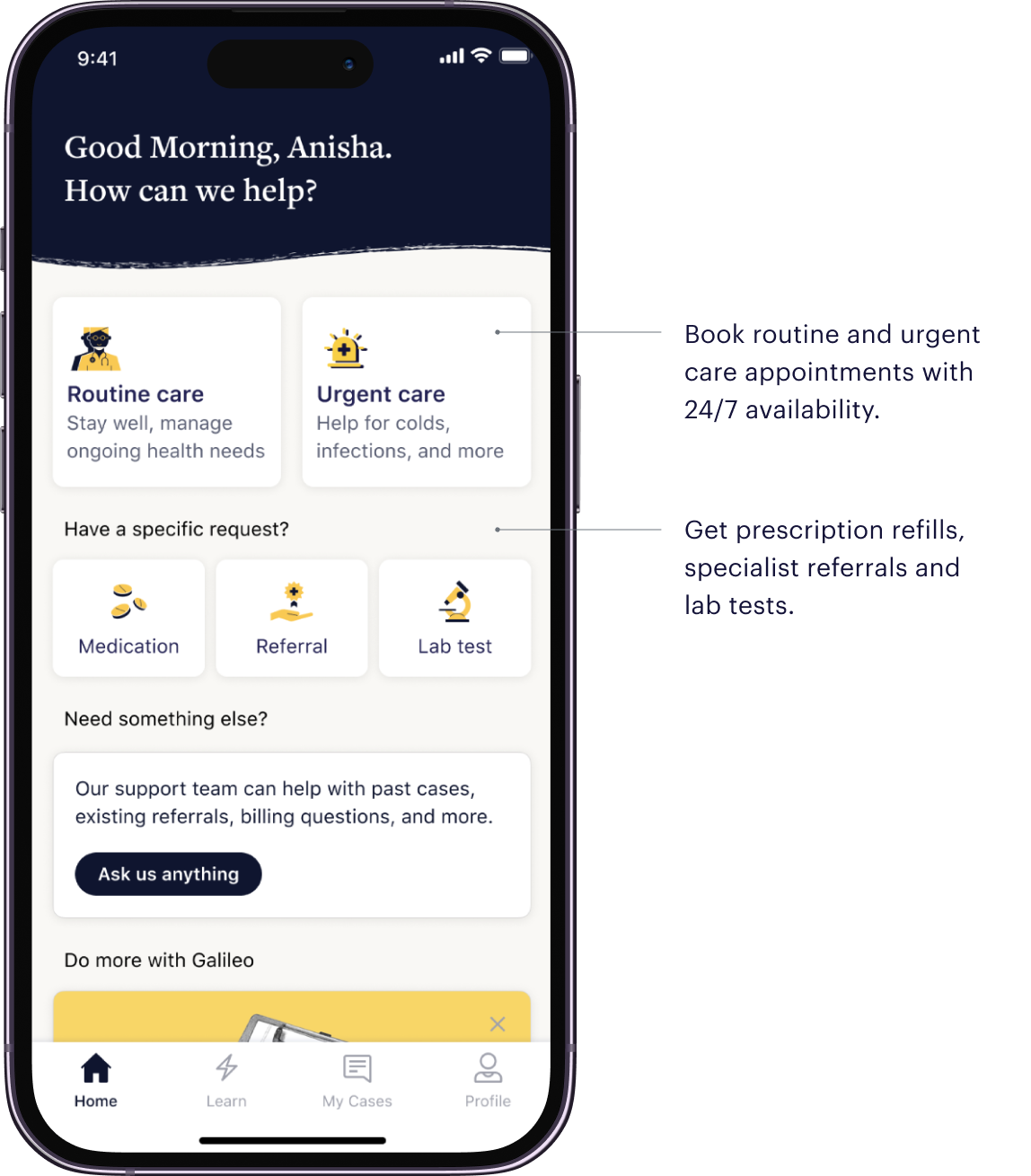
Galileo applies this model by integrating mental health directly into its advanced primary care approach. Rather than routing members to separate services by default, Galileo clinicians are equipped to diagnose, treat, and manage a wide range of behavioral health needs within an ongoing care relationship. This ensures continuity from first signal to sustained management, with coordinated escalation for more complex cases when needed.
The result is a simpler experience for members and a more accountable model for employers, one where mental health is not a disconnected benefit, but a core component of better overall outcomes.
%20(1)%20(1).webp)

.webp)











%20(1).webp)
%20(1).webp)











.webp)