- Employee assistance programs (EAPs) give employees confidential, no-cost access to counseling, mental health support, and work-life resources, often extending to dependents.
- Modern EAPs have evolved from a hotline number into always-on digital platforms that cover short-term counseling, urgent care, and care navigation.
- The strongest programs combine confidential clinical support with virtual primary care, so employees get mental health, medical, and substance abuse help in one place.
- Utilization depends entirely on awareness. The strongest employee benefits strategies communicate year-round, not just at open enrollment.
- Done well, an EAP helps employees manage stress, stay productive, and address work-related or personal issues before they escalate.
Employee assistance program benefits give employees confidential access to mental health counseling, work-life support, and care navigation at no direct cost. Here's how modern EAPs actually work.
Virtual primary care platforms make EAP benefits more usable than ever, folding clinical care, short-term counseling, and referral coordination into a single member experience. That matters for employers watching utilization rates and total cost of care.
What Is an Employee Assistance Program?
An employee assistance program (EAP) is a workplace benefit that connects employees with confidential support services. The definition has evolved significantly over the past decade. What started as basic counseling referrals has grown into comprehensive support systems addressing stress, anxiety, depression, substance abuse, financial concerns, legal questions, and family support for dependents.
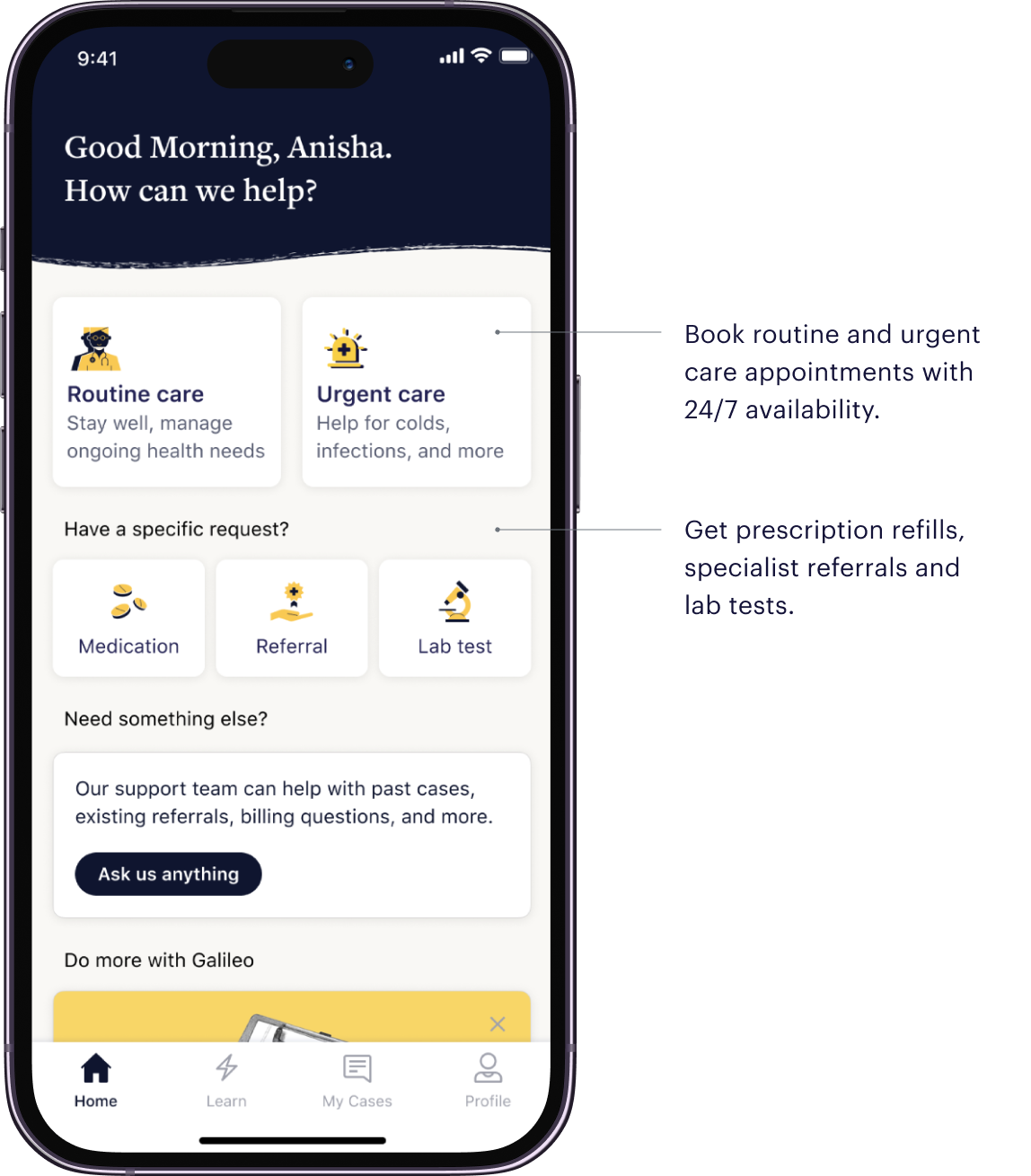
Modern EAP services operate through phone hotlines, in-person sessions, and digital platforms that offer 24/7 access to integrated mental health support. Leading options now combine virtual primary care, behavioral health, and care navigation into one benefit. Galileo, for example, delivers this kind of connected care in English and Spanish nationwide through text, video, and phone.
The core idea behind any EAP is simple. Give employees easy access to professional help before small problems become big ones. When someone is struggling with anxiety, burnout, or a work-related issue, an EAP provides a confidential path to support without the friction of finding a provider on their own.
Core Services Included in Most EAPs
Most programs share a common foundation of services, though coverage depth varies by vendor. Knowing what's included helps HR teams set realistic expectations and communicate clearly to employees.
- Short-term counseling: A set number of confidential counseling sessions per issue per year, usually 3 to 8, at no cost to the employee.
- Mental health and substance abuse support: Access to a licensed counselor for stress, anxiety, depression, grief, and substance abuse, with referrals to ongoing specialty care when needed.
- Work-life and legal consultation: Help with budget and debt questions, legal consultation, childcare and eldercare resources, and guidance for work-related conflicts.
- Care navigation and primary care: Integrated EAPs extend beyond counseling to include virtual primary care, prescription renewals, and coordination with in-network specialists.
- Dependent coverage: Most EAPs extend counseling and resources to the employee's dependents and household members.
A side-by-side view of traditional versus integrated EAP models:
How to Use Employee Assistance Program Benefits
Understanding how to use employee assistance program benefits is the difference between a benefit that collects dust and one that genuinely helps your team. Most programs follow a similar access pattern:
- Check your benefits portal or enrollment materials: EAP details are usually listed alongside medical and wellness benefits and include a toll-free number, app, or web portal.
- Call, chat, or message for an intake: A care coordinator or licensed counselor assesses your need and matches you to the right resource.
- Use your short-term counseling sessions: Schedule confidential counseling by text, phone, or video, typically within days rather than weeks.
- Get a referral if you need more: If your issue needs ongoing specialty care, the EAP connects you to an in-network provider covered by your health plan.
- Access work-life resources anytime: Legal consultation, budget help, and caregiver support are usually on demand, separate from counseling sessions.
All of these interactions are confidential. Employers see aggregate utilization data, not individual details, which is central to why EAPs work in the first place. Federal resources underscore how important confidentiality is for employee trust and engagement with substance abuse and mental health support.
What to Look for in an EAP Vendor
Not every EAP delivers the same value. When evaluating options, the strongest employee benefits packages share a few traits:
- 24/7 access through multiple channels, not just a business-hours hotline
- Licensed clinicians, with clear credentials
- Integrated mental health, primary care, and substance abuse support
- Multilingual service, especially English and Spanish for diverse workforces
- Transparent utilization reporting so HR can measure impact
- Dependent coverage and family-focused resources
- Strong privacy and security controls
Employer groups working with integrated virtual care platforms have reported meaningful reductions in total cost of care within the first six months of rollout, alongside higher engagement than traditional hotline-only models.
Making EAP Benefits Work for Your Team
The most comprehensive employee assistance program benefits deliver no value if employees don't know about them or trust they're truly confidential. A few tactics that move utilization:
- Communicate year-round, not just at open enrollment: Short monthly reminders outperform one annual rollout.
- Train managers to refer thoughtfully: Managers don't diagnose, they point employees to the right resource.
- Normalize usage: Share anonymous stories about how employees have used EAP services for things like budget coaching, legal consultation, or short-term counseling.
- Track aggregate utilization: Low numbers usually point to awareness gaps, not a lack of need.
- Revisit annually: Employee wellness needs shift. What worked three years ago may be under-delivering now.
For employers, offering robust EAP benefits signals real investment in workforce wellness. It also creates measurable value by helping employees stay focused, present, and productive, which supports retention and reduces absenteeism. Broader context on workplace health strategy from the CDC backs up what most HR leaders see in practice: integrated support beats disconnected perks.
Turn Your EAP Into Real Support
A confidential, well-communicated EAP is one of the highest-leverage employee benefits you can offer. It reaches people at the moments that matter and routes them to the right care fast, with no added cost to the employee.
Galileo partners with employers to deliver integrated 24/7 virtual primary care, mental health support, and care navigation in one member experience, in English and Spanish nationwide. If you're rebuilding your EAP or layering it into a broader benefits strategy, start with integration.

%20(1)%20(1).webp)

.webp)









%20(1).webp)
%20(1).webp)











.webp)